
Glory Rail supplied S49 rail fishplate assemblies, custom rail clamps, and 12-meter S49 rails to a Saudi Arabian heavy equipment integrator. During the review of the client’s fishplate drawings, our engineering team identified a slope mismatch that would leave a gap between the rail and the fishplate contact surface. This case study details how that issue was communicated and resolved before production began, along with the full order scope and quality inspection process.
Client Background
The client is a Saudi Arabian company that began as a metalworking workshop and grew into a comprehensive heavy equipment integrator. Today the group covers design, manufacturing, automation integration, and aftermarket parts supply across multiple industrial sectors.
For this order, the client needed S49 rail fishplate assemblies and rail clamps for a rail track system supporting one of their heavy equipment installations. The rails were supplied to their facility for on-site assembly and installation.
Project Overview
| Item | Details |
|---|---|
| Client | Saudi heavy equipment integrator |
| Application | Industrial rail track system |
| Rail | S49 (49E1, EN 13674-1), 12m × 11 pieces |
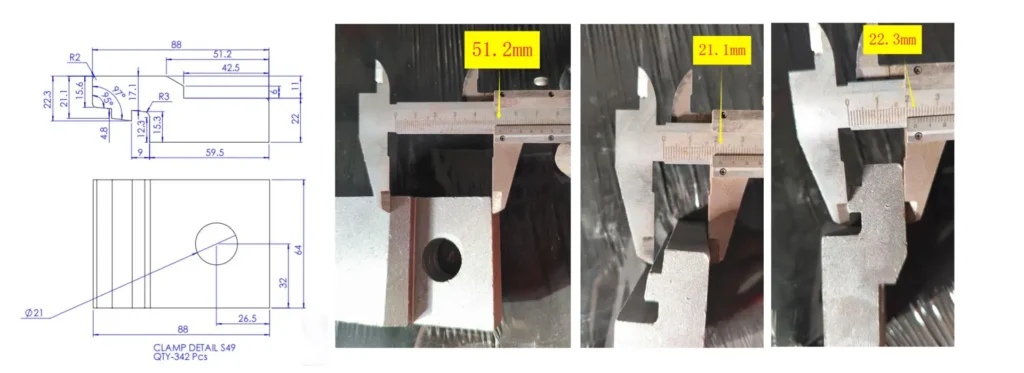
| Rail clamps | Custom single-hole bolted type, 340 pieces |
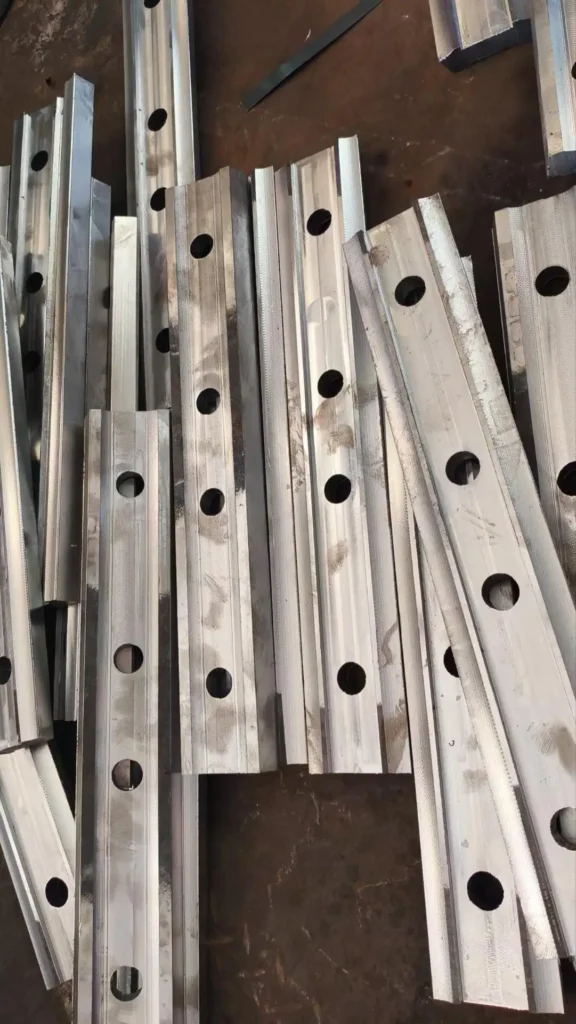
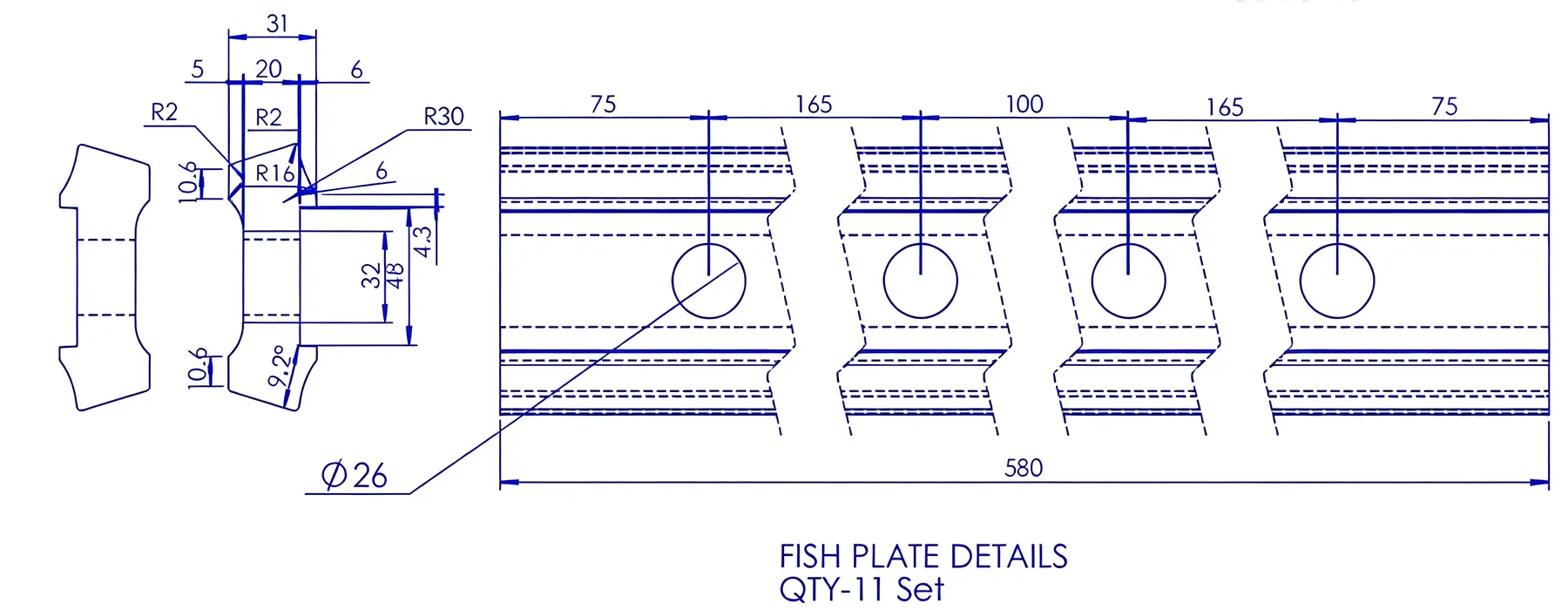
| Fishplates | Custom 4-hole, 11 sets (with bolts and nuts) |
| Port of loading | Tianjin, China |
| Destination port | Dammam, Saudi Arabia |
| Shipment date | End of October 2025 |
| Loading inspection | Third-party supervision at Tianjin port yard |
Order Scope
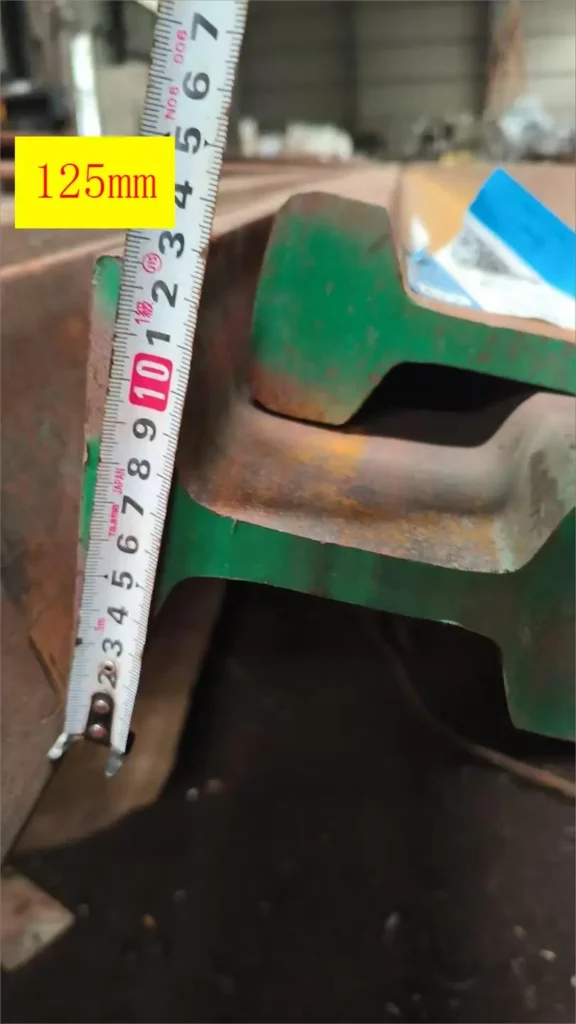
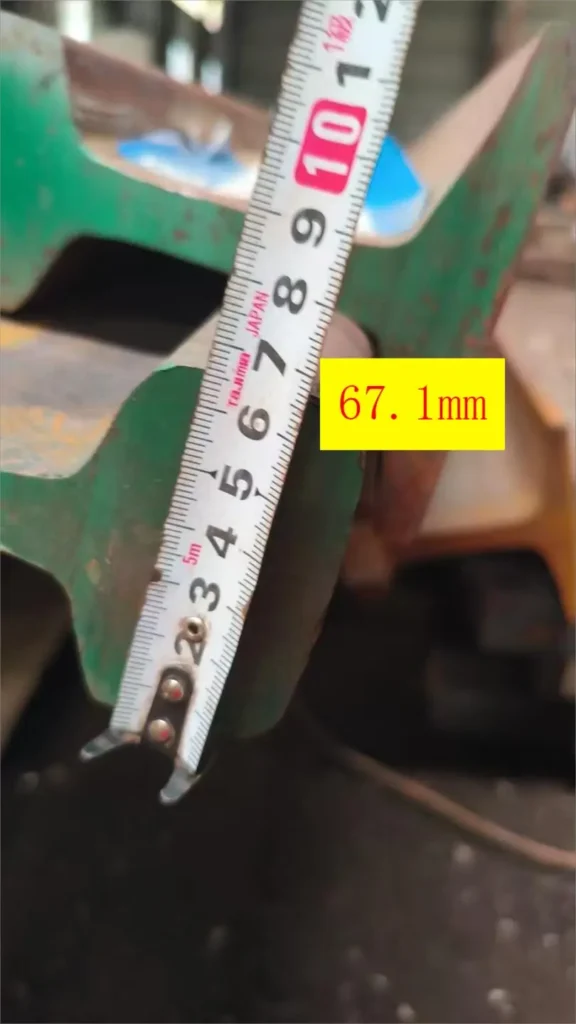
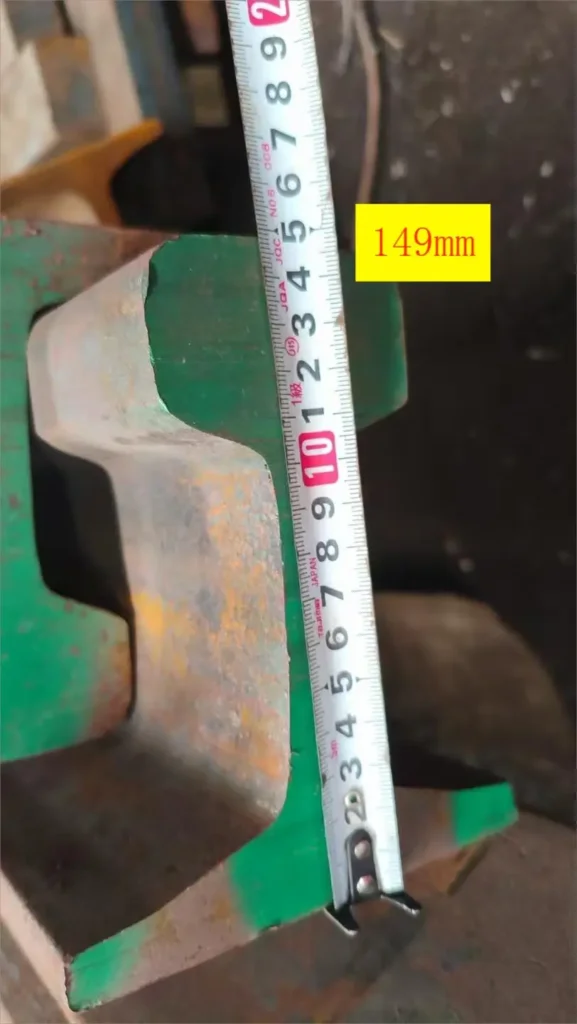
The order comprised three product categories: S49 rails, custom rail clamps, and custom fishplates. The S49 profile (49.39 kg/m, EN 13674-1) features a head width of 67mm, height of 149mm, and base width of 125mm — a medium-weight rail suited to industrial equipment tracks carrying moderate wheel loads.
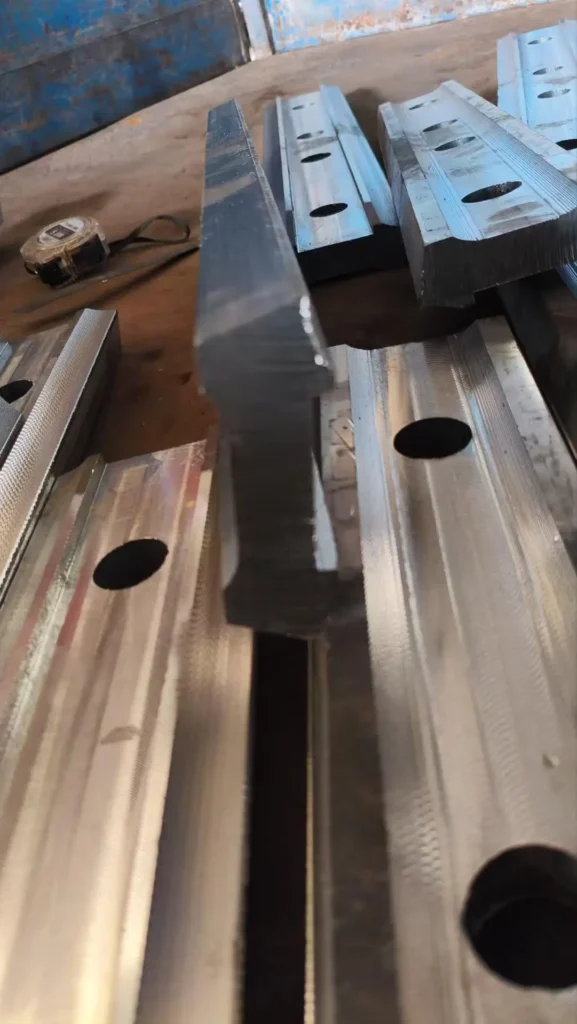
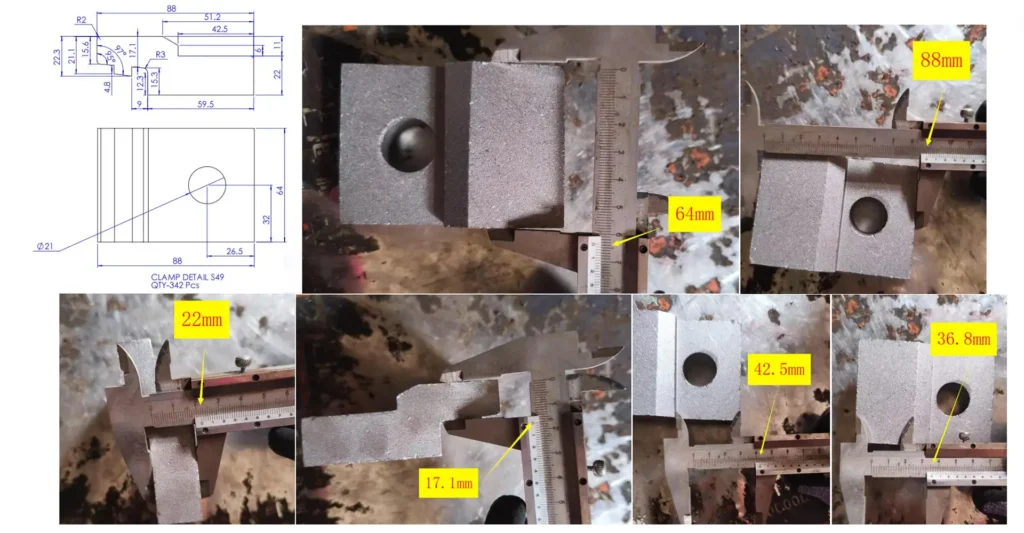
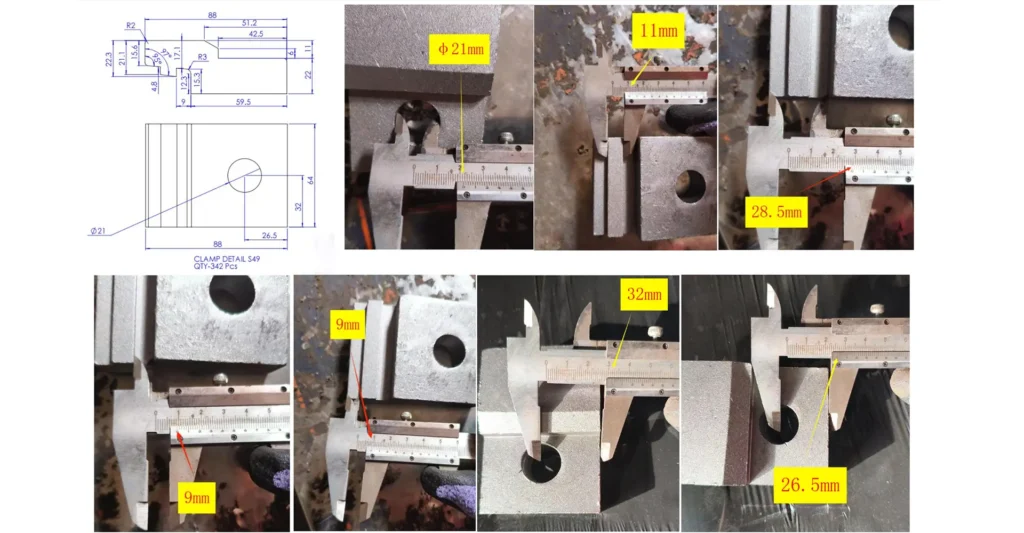
The rail clamps were a single-hole bolted design, 340 pieces total, produced to the client’s dimensional requirements. The fishplates were four-hole units supplied as 11 complete sets, each including matching bolts and nuts. Both accessory types were manufactured to match the S49 rail profile precisely.
Fishplate Design: Identifying the Gap
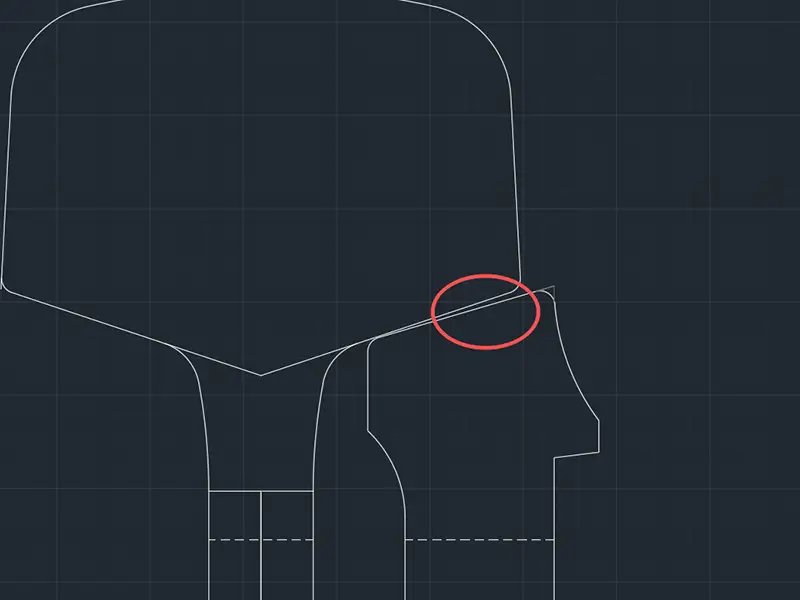
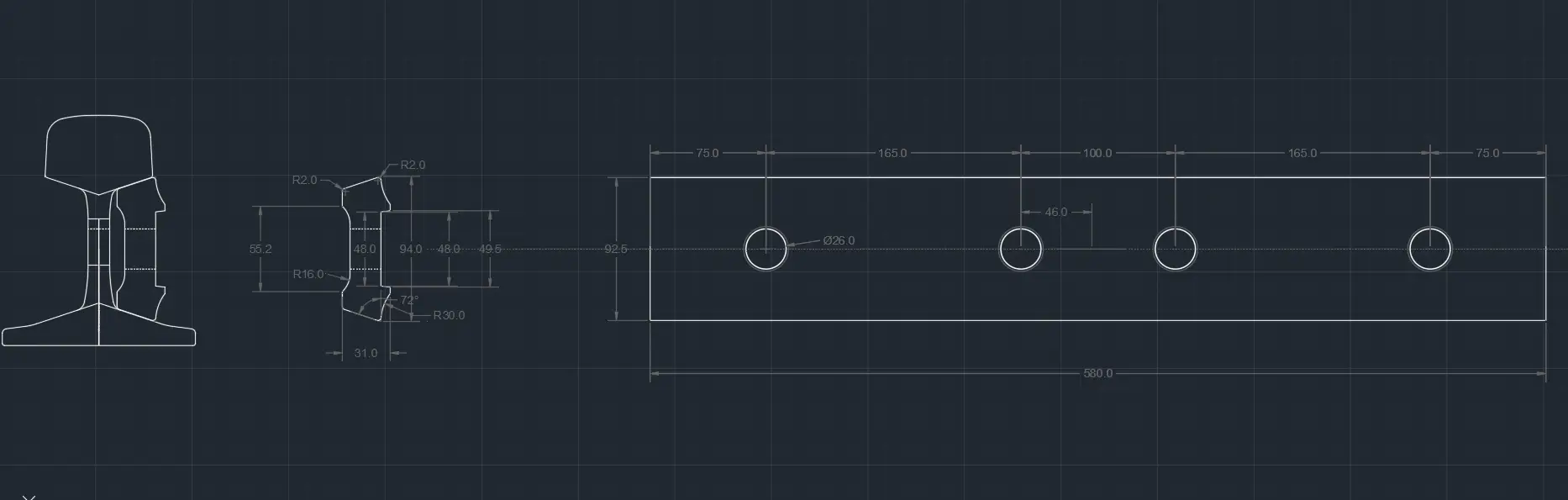
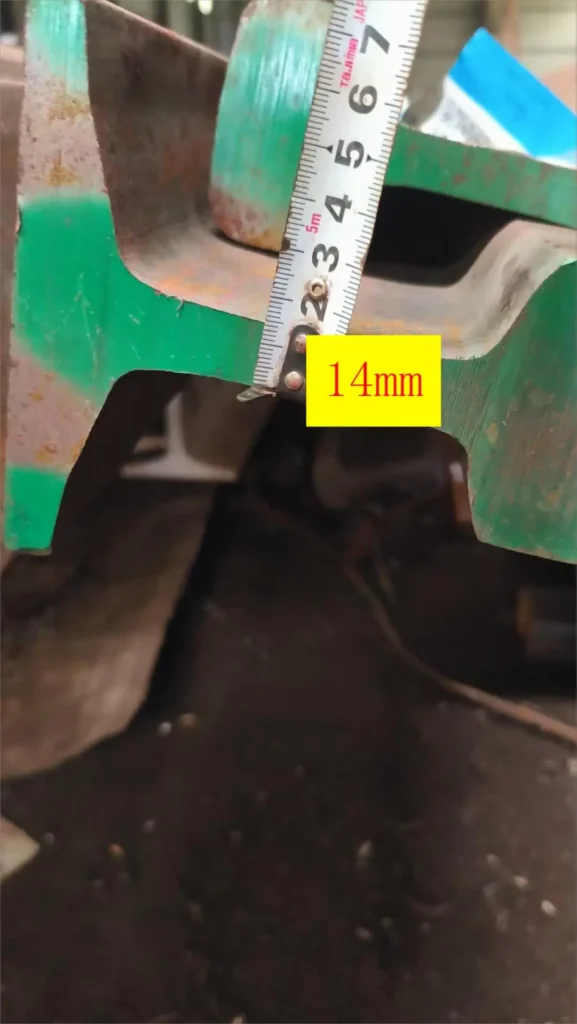
The client provided their own fishplate drawings for production. During our engineering review, a geometry issue became apparent. The slope angle on the client’s fishplate design did not perfectly match the S49 rail’s cross-section profile. If produced exactly as drawn, a small gap would remain between the fishplate contact surface and the rail web-base transition zone.
This gap would not prevent the fishplate from functioning — the bolts would still clamp the joint securely. However, a gap means uneven load distribution across the contact surface, which over time can accelerate localized wear and reduce joint stability under repeated dynamic loading.
Engineering Communication and Resolution
Rather than proceeding with production as-is, Glory Rail’s technical team contacted the client before manufacturing began. Two topics needed clarification: the fishplate slope geometry and the rail end hole positioning.
On the fishplate, the team explained that producing to the original drawing would leave a slight gap at the slope transition between the rail and the fishplate contact face. While this would not prevent the joint from functioning, the rail and fishplate slopes should ideally be consistent to ensure full surface contact and even load distribution. Two options were presented: produce the fishplate exactly as the client had drawn it, or machine the fishplate to match the S49 rail’s actual slope profile, eliminating the gap entirely.
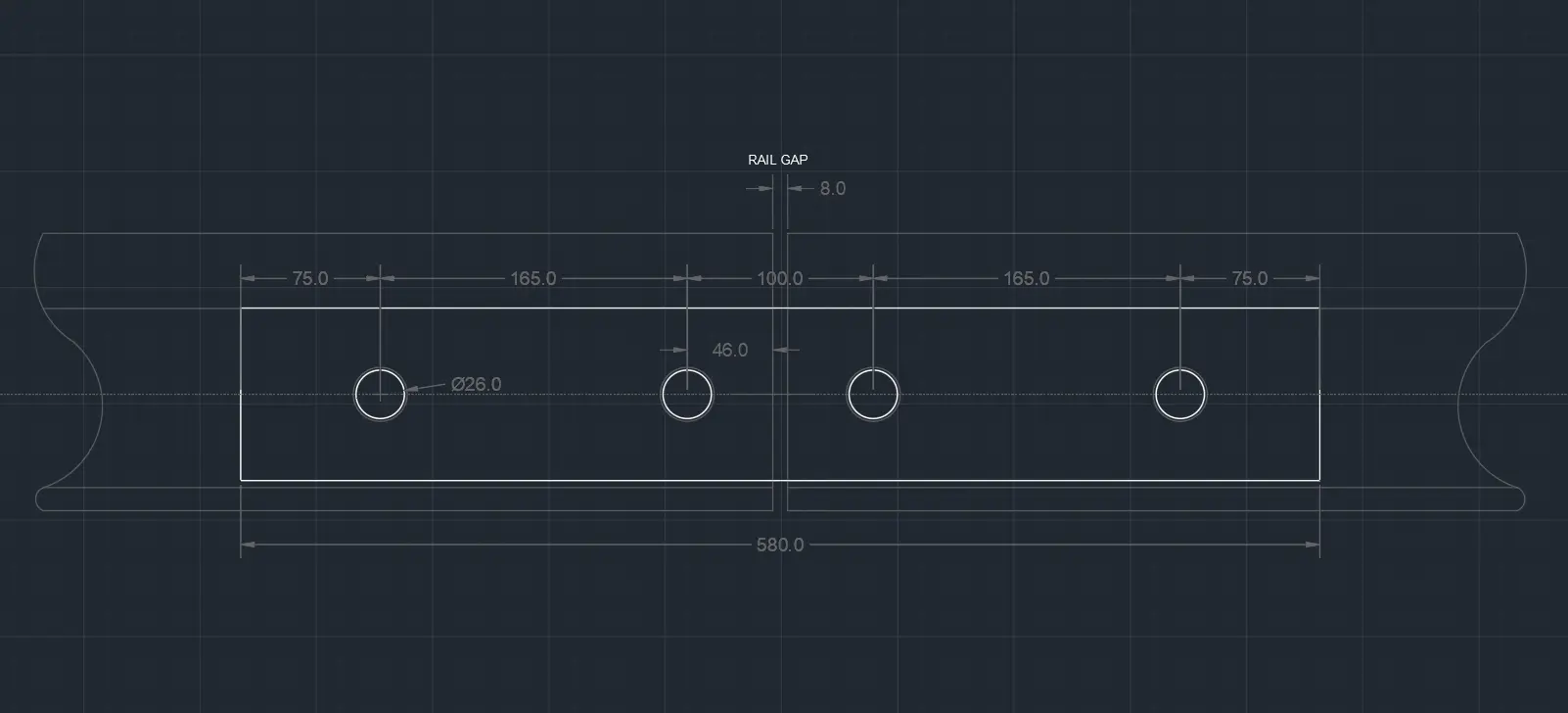
On the rail end holes, the team sought confirmation on the rail gap dimension. Standard practice uses an 8mm gap between rail ends, and hole positions are calculated based on that figure. The client was asked to confirm whether this gap matched their installation plan.
After reviewing the explanation, the client chose the modified approach — Glory Rail would machine the fishplate to match the rail slope, ensuring a gap-free fit. The client also decided to handle rail end drilling at their own facility, so the rails were supplied without pre-drilled holes.
Quality Inspection
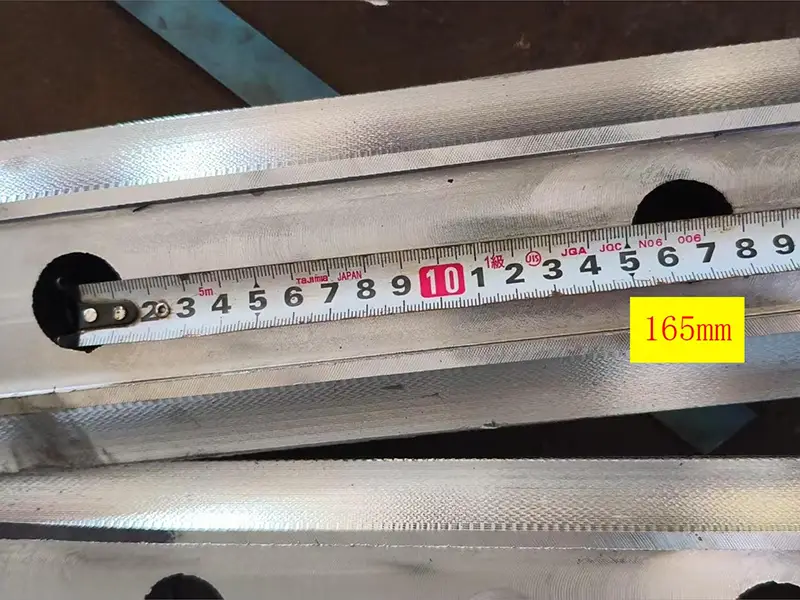
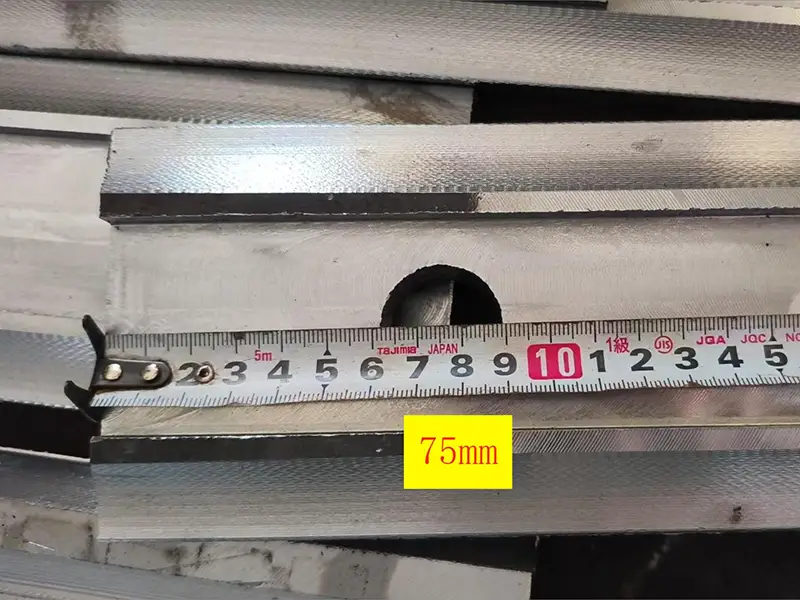
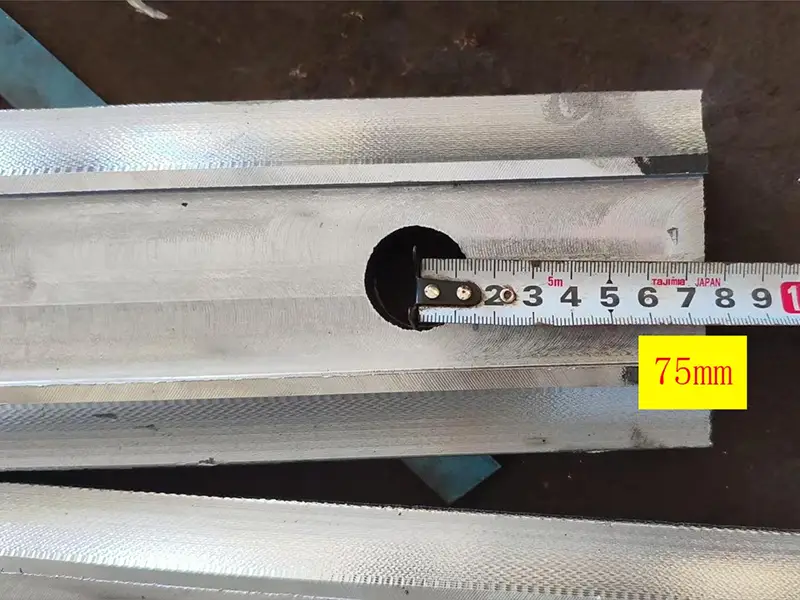
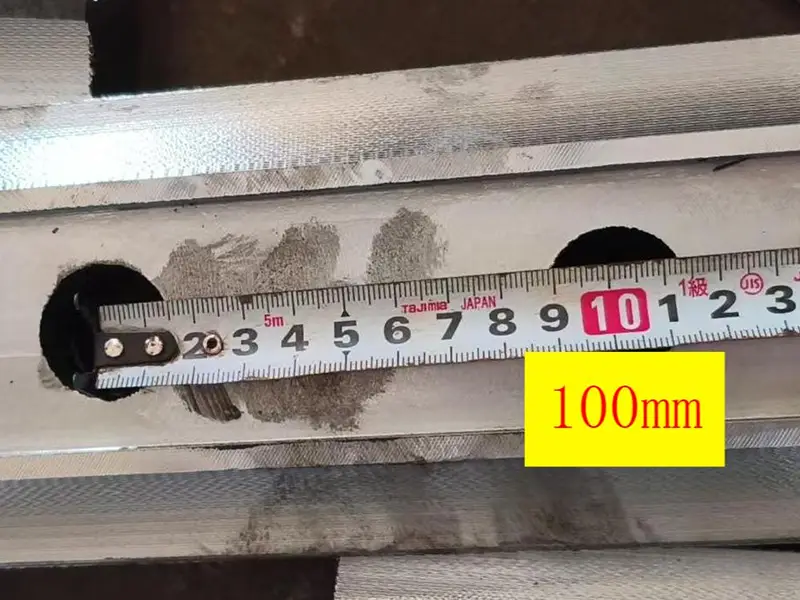
Before packaging, every component underwent dimensional verification. The fishplate hole spacing was measured against the approved drawing at five points across the batch. Rail clamp dimensions were checked for base width, bolt hole diameter, and overall height. The S49 rails were measured for head width, height, base width, and straightness.
Third-Party Loading Supervision
At Tianjin port, the client engaged a third-party inspection agency to supervise the container loading process. The agency verified that all rails, fishplates, and clamps were properly secured inside the containers, with adequate dunnage and lashing to prevent movement during ocean transport to Dammam.
The shipment departed Tianjin at the end of October 2025. All items arrived at the destination port in good condition, with the S49 rail fishplate sets and rail clamps ready for on-site assembly.
Why Glory Rail
This project illustrates several capabilities that define Glory Rail’s approach to rail system supply:
- Proactive drawing review — the fishplate slope gap was identified and communicated before any material was cut, preventing a latent quality issue from reaching the field
- Engineering-driven communication — clear explanation of the geometry problem, with two options offered (produce as-is or modify to match the rail profile), letting the client make an informed decision
- Custom accessory manufacturing — fishplates and rail clamps produced to exact dimensional requirements, verified through multi-point inspection
- Export logistics support — coordination with third-party loading inspectors and proper securing for ocean freight to Dammam
Glory Rail supplies S49 rail and matching accessories including fishplates, rail clamps, and joint hardware to DIN and EN standards. For projects requiring custom fishplate design or rail joint engineering, contact our technical team for drawing review and quotation.