
Crane Rail Systems
Crane Rails for Sale
DIN, QU, JIS and GOST crane rails supplied for overhead cranes, gantry cranes, port equipment and heavy industrial runways — with profile selection, project processing and matching rail system components from GloryRail.
- DIN 536 A45–A150
- QU70–QU120
- JIS CR73–CR100
- GOST KP profiles
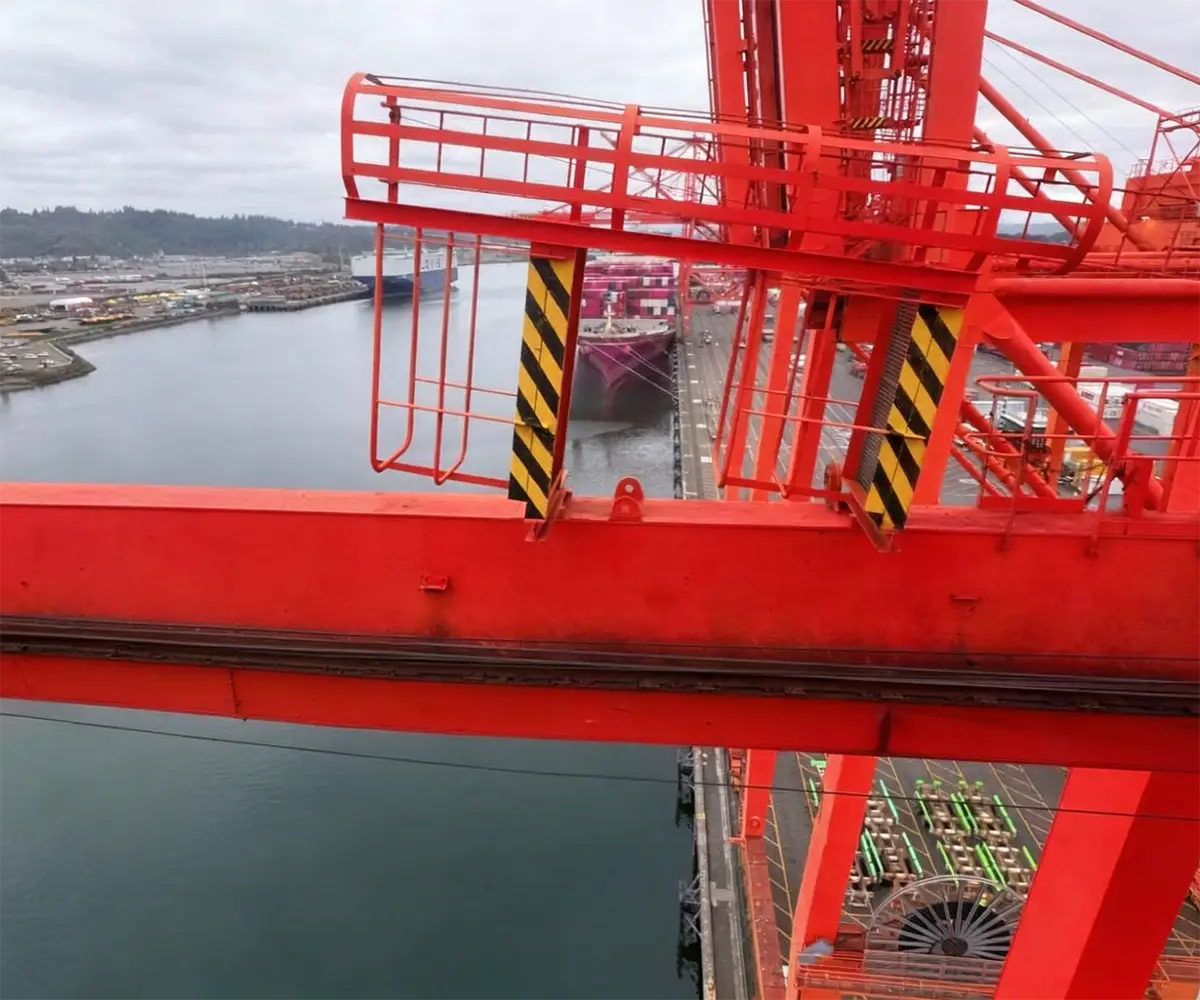
Before You Order
What Data Actually Determines
a Crane Rail?
A crane’s rated lifting capacity is not the same thing as the load carried by one runway wheel. For a rail quotation, the most useful starting data are the maximum wheel load, wheel geometry, wheel spacing and existing or planned runway support.
For a faster quotation, send the crane drawing or wheel-load table. If those documents are unavailable, send the crane capacity, wheel count, wheel spacing, wheel diameter and the rail profile or existing rail dimensions. Glory Rail can then match the commercial inquiry to the engineering information available.
Product Range
Crane Rail Profiles by Standard
Glory Rail supplies crane rail profiles to a range of international standards. Use the specified standard, profile designation and approved drawing as the primary reference when identifying the required rail section. The profile number alone is not enough to confirm compatibility.
DIN 536
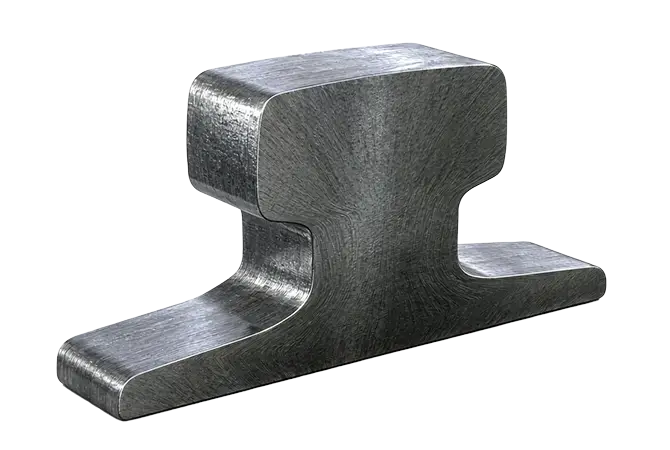
DIN 536 Crane Rails
The DIN 536 A-series includes widely used crane rail profiles such as A45 through A150. These wide-base profiles increase in section size across the series, providing different rail dimensions and capacities for crane runway applications.
YB/T 5055
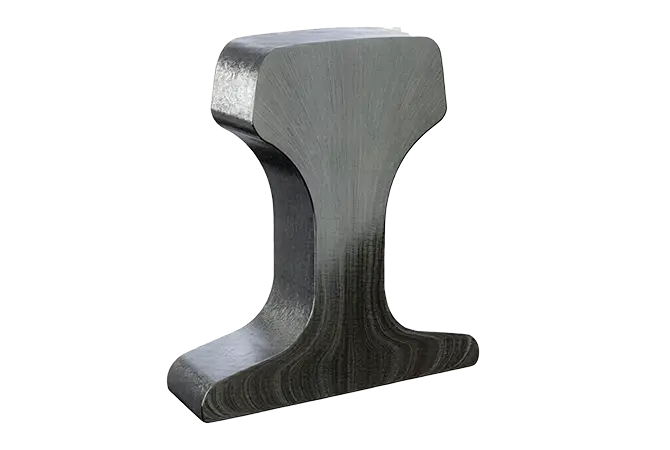
Chinese QU Crane Rails
QU70, QU80, QU100 and QU120 are widely used Chinese crane rail profiles. The QU number identifies the rail profile and should not be treated as a direct equivalent to a DIN A-series or JIS crane rail with a similar number.
CR-SERIES
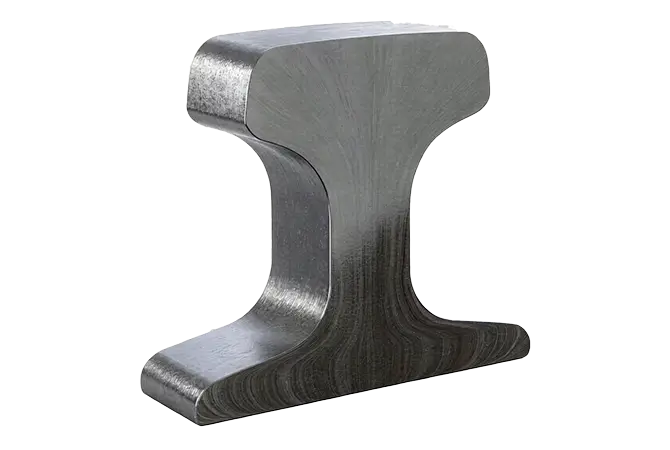
CR73 & CR100 Crane Rails
CR73 and CR100 are established crane rail profiles supplied by multiple railmakers under their respective specifications. Nippon Steel specifies the corresponding profiles as CR73K and CR100K under its ST-17 sales specification, while other producers may use the shorter CR73 and CR100 designations.
GOST 4121 / R 53866
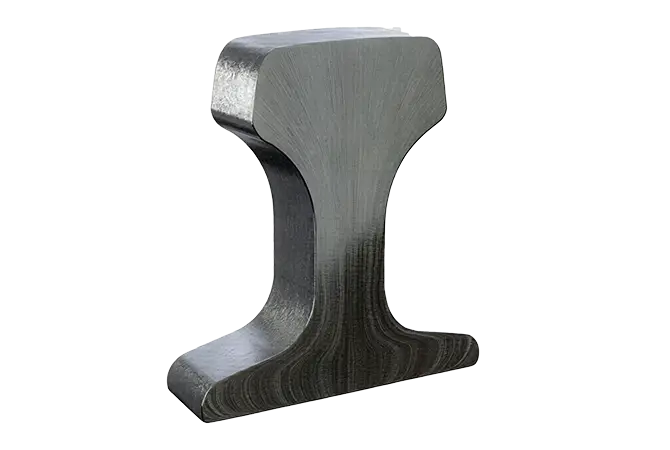
GOST Crane Rails
The GOST crane rail series covers five profiles: KP70, KP80, KP100, KP120, and KP140. These profiles are defined in both the interstate GOST 4121-96 and Russian national GOST R 53866-2010 standards, with the applicable standard specified according to project and procurement requirements.
Crane Rail Supply & Project Quotes
Looking for crane rail pricing, current availability or a project quotation? Glory Rail is a crane rail supplier offering DIN 536, QU, JIS and GOST crane rails for project orders, with matching fastening components and custom processing available. Send the rail profile, quantity, length, steel grade, processing requirements and destination port for a tailored quote.
Read the Section
Crane Rail Dimensions That Matter at Procurement
The four dimensions most often needed for interface checks are head width, overall height, base width and web thickness. Nominal mass then becomes important for tonnage, quotation and shipping calculations.
| Profile | Head Width | Height | Base Width | Web | Mass |
|---|---|---|---|---|---|
| DIN 536 Crane Rails | |||||
| A45 | 45 mm | 55 mm | 125 mm | 24 mm | 22.10 kg/m |
| A55 | 55 mm | 65 mm | 150 mm | 31 mm | 31.80 kg/m |
| A65 | 65 mm | 75 mm | 175 mm | 38 mm | 43.10 kg/m |
| A75 | 75 mm | 85 mm | 200 mm | 45 mm | 56.20 kg/m |
| A100 | 100 mm | 95 mm | 200 mm | 60 mm | 74.30 kg/m |
| A120 | 120 mm | 105 mm | 220 mm | 72 mm | 100.00 kg/m |
| A150 | 150 mm | 150 mm | 220 mm | 80 mm | 150.30 kg/m |
| YB/T 5055 — QU Crane Rails | |||||
| QU70 | 70 mm | 120 mm | 120 mm | 28 mm | 52.80 kg/m |
| QU80 | 80 mm | 130 mm | 130 mm | 32 mm | 63.69 kg/m |
| QU100 | 100 mm | 150 mm | 150 mm | 38 mm | 88.96 kg/m |
| QU120 | 120 mm | 170 mm | 170 mm | 44 mm | 118.10 kg/m |
| CR Crane Rails | |||||
| CR73 | 100 mm | 135 mm | 140 mm | 32 mm | 73.30 kg/m |
| CR100 | 120 mm | 150 mm | 155 mm | 39 mm | 100.20 kg/m |
| GOST KP Crane Rails | |||||
| KP70 | 70 mm | 120 mm | 120 mm | 28 mm | 52.80 kg/m |
| KP80 | 80 mm | 130 mm | 130 mm | 32 mm | 63.69 kg/m |
| KP100 | 100 mm | 150 mm | 150 mm | 38 mm | 88.96 kg/m |
| KP120 | 120 mm | 170 mm | 170 mm | 44 mm | 118.10 kg/m |
| KP140 | 140 mm | 170 mm | 170 mm | 58 mm | 141.70 kg/m |
What These Dimensions Help You Check
Head Width
Indicates the available running surface at the rail head.
Overall Height
Defines the overall height of the rail section.
Base Width
Shows the width of the rail foot and seating area.
Web Thickness
Defines the thickness of the central web.
Mass per Metre
Provides the nominal weight of the rail section.
STEEL GRADE & MATERIAL
Crane Rail Steel Grades: Chemical & Mechanical Requirements
Steel grade affects the chemical composition, strength and hardness of a crane rail. Compare the key material requirements below, then specify the grade together with the rail profile and applicable standard.
| Steel Grade | Chemical Composition (mass fraction, %) | Mechanical Properties | ||||||||
|---|---|---|---|---|---|---|---|---|---|---|
| C | Si | Mn | P | S | Cr | V | Tensile Strength, Rm | Elongation, A | Hardness, HBW | |
| 50Mn Carbon-manganese steel | 0.48–0.56 | 0.17–0.37 | 0.70–1.00 | ≤0.035 | ≤0.035 | ≤0.25* | — | ≥645 MPa | ≥13% | ≤255 HB |
| U71Mn Manganese rail steel | 0.60–0.80 | 0.15–0.58 | 0.70–1.20 | ≤0.025 | ≤0.025 | — | ≤0.030 | ≥880 MPa | ≥10% | 260–300 |
| 900A Higher-strength rail steel | 0.60–0.80 | 0.10–0.50 | 0.80–1.30 | ≤0.040 | ≤0.040 | — | — | ≥880 MPa | ≥10% | 260–300 |
| U75V Vanadium-alloyed rail steel | 0.71–0.80 | 0.50–0.80 | 0.75–1.05 | ≤0.025 | ≤0.025 | — | 0.04–0.12 | ≥980 MPa | ≥10% | 280–320 |
| U78CrV Chromium-vanadium steel | 0.72–0.82 | 0.50–0.80 | 0.70–1.05 | ≤0.025 | ≤0.025 | 0.30–0.50 | 0.04–0.12 | ≥1080 MPa | ≥9% | 310–360 |
Higher-strength grades may be specified where the project requires higher tensile performance or increased load and wear resistance.
For heavily loaded crane runways, hardness and wear requirements should be checked together with the selected steel grade.
Welding, cutting and machining requirements should be considered before specifying a higher-alloy or higher-strength material.
Rail Connections
Crane Rail Jointing & Welding
The jointing method determines how adjacent crane rail sections are connected and maintained. Rail-to-rail connections are typically made with bolted joint bars or fishplates, or by end-to-end welding. The correct method depends on the rail profile, steel grade, joint design and project requirements. Glory Rail can supply the corresponding rail, jointing components and processing to match the specified system.
Bolted Rail Joints
A bolted joint connects adjacent rail ends with matched joint bars or fishplates. The joint is specified by the rail section and the joint drawing, not simply by rail weight or nominal name.
Welded Rail Joints
End-to-end welding can create longer continuous rail sections and remove the mechanical joint. It is not a generic add-on: the welding method must be compatible with the actual rail material, section and project procedure.
What Should Be Written Into the Rail Order?
When jointing is part of the scope, identify the rail section, connection method and the documents that control the work. Glory Rail can quote the rail together with the specified joint or fastening components.
Crane Rail Applications
Crane Rail Applications by Industry and Use
Crane rails are used across ports, shipyards, factories, waste treatment plants, mining sites and other material-handling environments. The required rail profile depends on the crane, equipment and runway design, so the same application may use different rail sections.
| Application | Typical Equipment / Use | Typical Duty Range | Real Project Reference |
|---|---|---|---|
| Ports & Container Terminals Container handling | Mobile port cranes, STS / quay cranes, and container handling systems using STS Crane Short Rail | Medium to Heavy Duty |
A65 — 1.5 m short rails and 12 m rails for port crane applications. A100 — Mobile port crane with container spreader for vertical container handling at a large terminal standby berth. |
| Shipyards & Shipbuilding Shipyard lifting systems | Gantry / portal cranes and rail systems for shipyard handling | Medium to Heavy Duty | A100 — Crane rail track for a shipyard slipway. |
| Waste Treatment Plants Waste handling | Grab cranes and material handling equipment for waste transfer | Medium to Heavy Duty | A65 — Grab crane used in a waste treatment plant. |
| Mining & Open-Pit Operations Material handling | Material-handling equipment and mobile mining equipment | Medium to Heavy Duty | A65 — Outdoor mining and material-handling equipment. |
| Steel, Brick & High-Temperature Plants Production-line handling | Heavy material-handling equipment around furnaces and production lines | Medium to Heavy Duty | A100 — Rail application around a high-temperature furnace in a brick plant. |
| Factories & Crane Workshops Workshop lifting | Overhead / bridge cranes and workshop crane systems | Light to Medium Duty | QU70 — Crane rail for a newly built crane workshop. |
| Process & Material Handling Plants Continuous material transport | Material transport and conveying equipment | Light to Medium Duty |
A75 — Fertilizer conveying equipment. Sugar Plant — Material transport equipment. |
| Marine & Shipboard Handling Deck lifting systems | Shipboard deck cranes and marine lifting systems | Light to Medium Duty | A45 — Rail application for a shipboard deck crane. |
Different Applications, Different Rail Requirements
The same crane rail profile may be used in different industries and service conditions. A45, A65, A75, A100 and QU70 shown above are references from actual applications, not fixed industry-to-profile matches. Final rail selection depends on the actual crane, wheel loading, operating conditions and runway design.
See More Real Crane Rail Project Cases
Explore additional crane rail projects covering port cranes, shipyards, industrial plants, material handling systems and rail replacement applications.
Rail-to-Runway Interface
Complete Crane Rail Fastening System & Support Interface
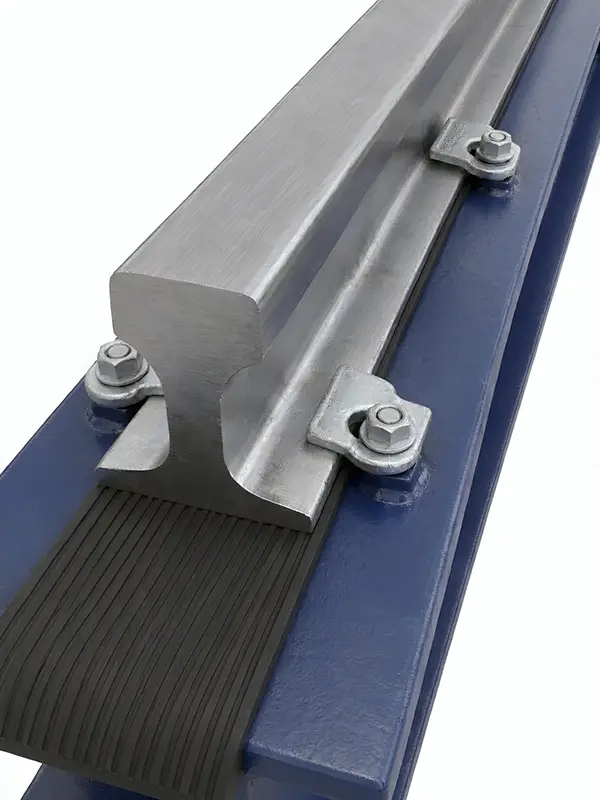
A crane rail works inside a load path that includes the wheel, rail, pad, fastening, support seat and runway structure. Glory Rail can supply the rail together with matching pads, clips, joint bars and related components when specified.
Project Processing
What Rail Processing Should Be Specified?
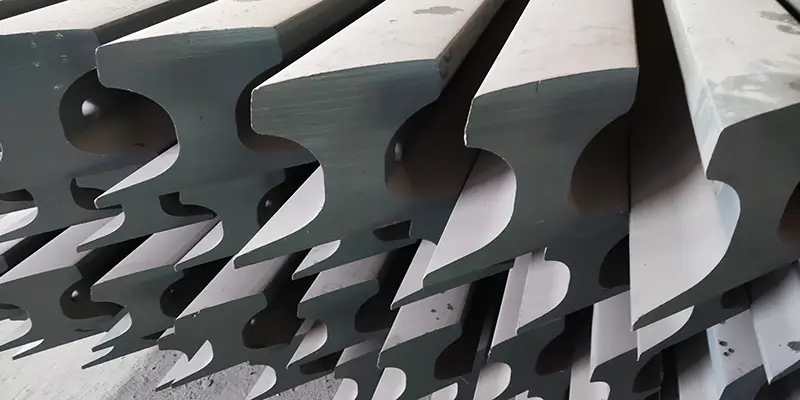
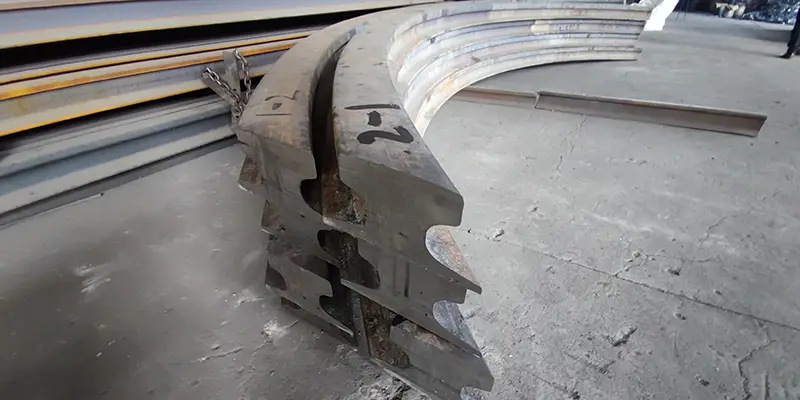
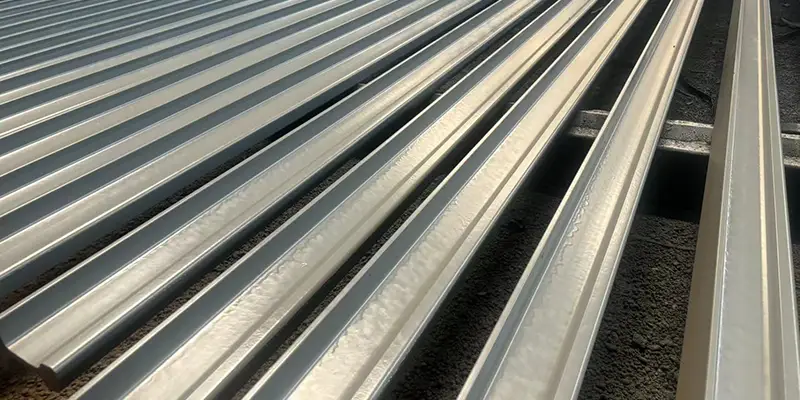
A processing request should identify the finished dimension or geometry, not just the operation name. Glory Rail can arrange project-specific cutting, drilling, beveling, bending and corrosion-protection work.
Quality & Documentation
Crane Rail Quality, Tolerances & Documents
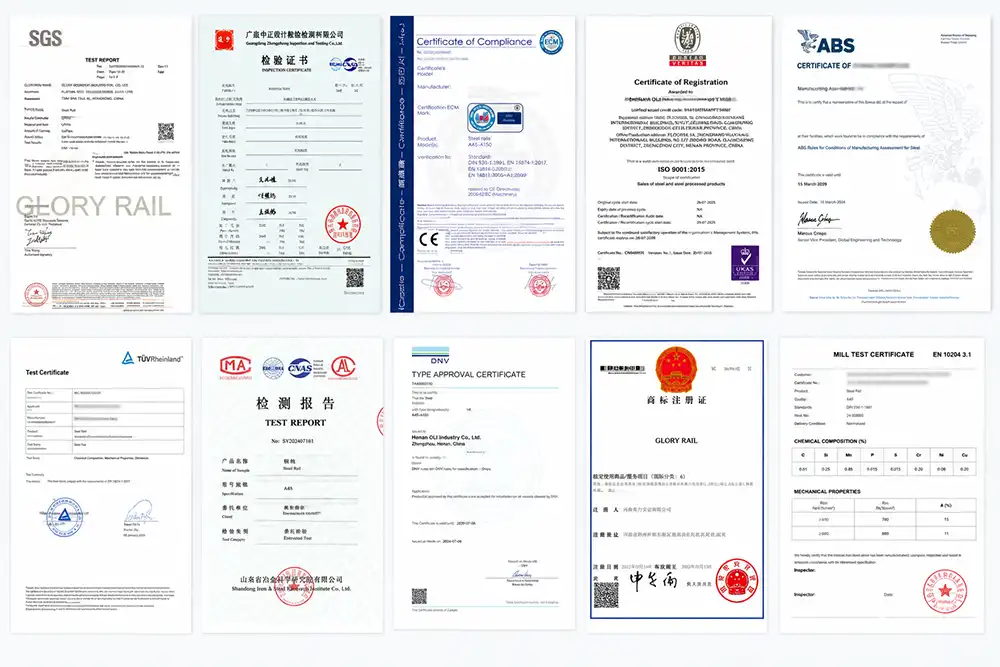
Quality control covers more than the finished rail. From profile and material checks to inspection records and certifications, the supplied documentation helps confirm that the rails meet the agreed requirements.
Clear Documentation for Every Order
Mill Test Certificates, inspection records and applicable quality certifications can be provided with the order. Additional third-party inspection can also be arranged when required by the project or buyer.
Export Logistics
Crane Rail Packaging & Shipping for Export Projects
Long steel rails require a packing and loading plan that considers piece length, bundle weight, lifting method, destination handling and storage exposure. The final arrangement is confirmed with the shipment rather than assumed from the rail profile alone.
Strapping & Protection
Rails can be supplied in securely strapped bundles with timber blocks or dunnage arranged to support handling. Additional moisture or corrosion protection can be specified for ocean transit or extended storage.
Loading by Rail Length
Containerized shipping and breakbulk or project-cargo arrangements can be considered according to rail length, bundle dimensions, total payload and the destination handling requirements. The loading plan is confirmed before dispatch.
Separate, Labeled Components
Clips, pads, joint bars, bolts and other small components can be packed separately and identified by size or rail profile to simplify receiving and installation.
FAQ
Engineering & Procurement Questions
Based on common questions from crane rail buyers, this FAQ covers the key points to check before placing an order, including profile compatibility, load requirements, steel grade, jointing, processing, inspection, and shipping.
What is the difference between crane rail and railway rail?
Crane rail is generally a wide-foot, low-profile section developed for crane wheel loading and runway restraint, while conventional railway rail is a different section designed for railway track geometry and service conditions. Their dimensions, fastening interfaces and design basis should not be treated as interchangeable.
Can A100, QU100 and CR100 be used as substitute crane rails?
Not by profile number alone. A100 is geometrically very different from QU100 and CR100, while QU100 and CR100 also have different sections. A substitution requires a cross-section, wheel-interface, support and fastening review against the project drawings.
Should crane rail joints be bolted or welded?
Either approach may be used where allowed by the runway design and project specification. Bolted joints require a matched joint-bar and bolt arrangement; welded joints require a procedure compatible with the rail grade, section, end preparation and inspection requirements.
What custom crane rail processing can be supplied?
Project orders may include cut-to-length rails, drilling, end beveling or chamfering, bending and specified surface treatment. The finished dimensions, hole locations and other acceptance details should come from the approved processing drawing.
How are crane rails packaged for sea freight?
Rails are normally secured in bundles for handling, with timber supports or dunnage where required. Anti-rust treatment, moisture protection and separate packing for accessories can be added according to the shipment route, storage conditions and buyer requirements.
How is crane rail load capacity determined?
Rail suitability depends on the maximum wheel load and its load distribution, wheel geometry, wheel spacing, runway support conditions, operating duty and the required section properties. Crane lifting capacity alone is not enough to select a rail profile.
What steel grades are available for crane rails?
Common procurement specifications may include U71Mn, 900 / 900A, 1100-class and other project-specified grades. The correct material must be tied to the applicable rail standard, project requirement and MTC rather than inferred from the profile number.
Can crane rail be supplied with ultrasonic testing or third-party inspection?
Yes. The buyer should define the testing method, inspection scope and acceptance criteria before production so the requirement is included in the inspection plan.
What information is needed for an accurate crane rail quotation?
Provide the rail profile, applicable standard, steel grade if specified, rail length, total quantity, processing scope, required accessories, inspection requirements, destination port, delivery term and target delivery date. A drawing is especially valuable when the specification is not fully defined.
How do I identify a crane rail for replacement when the profile is unknown?
Measure the head width, overall height, base width and web thickness, and provide clear photos of the cross-section, fastening arrangement and rail joint. Existing drawings or markings should also be checked where available before a replacement profile is approved.