
Rail Corrosion Protection
Introduction
Rail corrosion poses a critical threat to railway infrastructure, with untreated rails in coastal or humid environments experiencing annual corrosion rates of 0.1–0.3mm. This degradation compromises structural integrity and operational safety.
Rail corrosion protection (Sandblasting combined with a systematic painting) process emerges as a cost-effective and versatile solution, ideal for ports, shipyards, and industrial zones.
Protection Technologies
| Method | Process | Lifespan | Cost | Suitability |
|---|---|---|---|---|
| Hot-Dip Galvanizing | Immersing rails in molten zinc to form a protective alloy layer. | 20–30 years | High | Full-rail protection, low repair flexibility. |
| Sandblasting & Painting | Mechanical surface preparation followed by multi-layer paint systems. | 10–15 years | Medium | Targeted repairs, complex structures (welds, joints). |
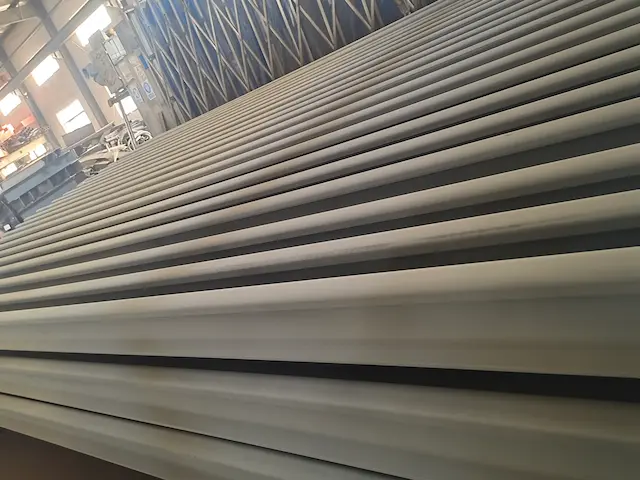
Sandblasting: The Foundation of Protection
Pre-treatment Process
Surface Cleaning: Remove dust, oil, and loose rust via high-pressure air or mechanical tools.
Abrasive Selection:
Quartz sand: Cost-effective for light rust removal.
Steel shot/sand: Powerful for heavy rust or old paint stripping.
Copper slag: Low-dust, ideal for eco-sensitive areas.
Key Parameters:
Pressure: 0.4–0.8 MPa (balanced for efficiency without substrate damage).
Angle: 45°–75° to ensure uniform surface impact.
Distance: 100–300 mm, achieving surface roughness (Ra 25–50μm) for optimal paint adhesion.
Post-blasting: Immediate air blowing to remove abrasive residues.
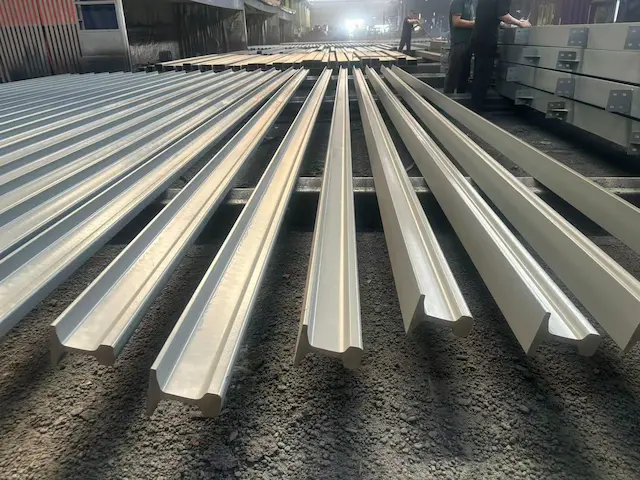


The Triple-Layer Paint System
1. Primer Layer (Anti-Rust Core)
- Material: Zinc-rich epoxy (≥80% zinc by weight).
- Function: Sacrificial anode protection, filling micro-pores from sandblasting, and chemical bonding to the rail.
- Application: High-pressure airless spraying, dry film thickness 60–80μm, curing ≥4 hours at 25°C.
2. Intermediate Layer (Structural Reinforcement)
- Material: Mica iron oxide epoxy.
- Function: “Labyrinth effect” from flake-shaped fillers delays corrosion penetration, enhances mechanical strength.
- Application: Brush/roller coating, dry film thickness 80–100μm, light sanding post-cure.
3. Finish Layer (Weather Resistance)
- Material: Polyurethane (general use) or fluorocarbon (coastal/heavy pollution).
- Function: UV/weather resistance, chemical protection, and aesthetic finish (common colors: gray/dark gray).
- Application: Spray coating, dry film thickness 60–80μm, humidity ≤85%, temperature 5–35°C.
Critical Exclusions: No-Paint Zones
- Rail Head Surface
- Reason: Painting reduces friction (compromising braking) and peels under wheel rolling, risking wheel/rail damage.
- Solution: Use shielding tools to keep a 30mm paint-free zone on the rail top.
- Welding Areas
- Reason: Paint decomposes at high welding temperatures (2,500°C+), releasing gases that cause weld porosity.
- Solution: Remove coating within 200mm of the weld, re-sandblast post-welding, and apply specialized sealants (e.g., silicone rubber).
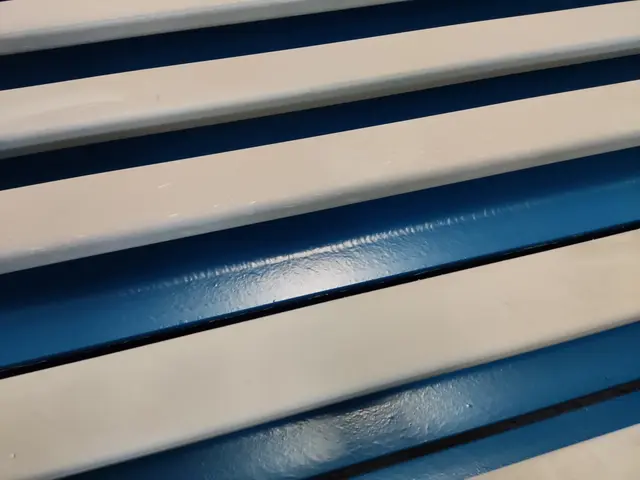
Quality Control & Standards
Key Tests
- Surface Roughness: Ra 25–50μm (measured via profilometer).
- Film Thickness: Total ≥220μm (magnetic gauge), no single point <80% of design.
- Adhesion: Cross-cut test (ISO 2409), no coating detachment.
- Holiday Detection: 3,000V spark test for pinhole-free coverage.
International Standards
- AREMA (USA): Specifies coating durability for railway rails.
- TB/T 1527-2011 (China): Railway steel structure coating requirements.
- ISO 8501/12944: Global benchmarks for surface preparation and corrosion protection.
Why Choose Us for rail corrosion protection?
17+ years specializing in rail systems, we offer end-to-end solutions from GB-standard rails to custom-fabricated anti-corrosion components.
Our one-stop service includes in-house manufacturing of high-strength clamps, premium rubber pads, and durable fasteners, all quality-controlled for coastal, industrial, and port environments.
With rapid delivery from stocked inventories and tailored solutions for unique needs, we blend international standards with cost-efficient designs.
Our technical team ensures precision from material selection to installation, backed by robust after-sales support for long-term reliability.
Trust us to transform corrosion risks into durable, high-performance rail systems.