
Crane rail coating requirements involve more than paint selection and film thickness. They also include service conditions, surface preparation, coating compatibility, and masking requirements.
For rails used in ports, shipyards, steel mills, warehouses, and other industrial facilities, these details help determine whether the selected coating system suits the operating environment and meets project requirements.
Defining these requirements before production can help prevent rework caused by incorrect DFT, paint on designated no-coating areas, or unclear welding-zone requirements. This guide explains the key items to confirm in a crane rail coating specification and the information to provide when requesting a quotation.
What Should a Crane Rail Coating Specification Include?
Before requesting a quotation for painted crane rails, confirm the main technical requirements with the project team.
| Specification Item | What to Confirm |
|---|---|
| Service environment | Indoor, outdoor, coastal, industrial, or chemical exposure |
| Rail type | Rail profile, steel grade, and heat-treatment requirements |
| Surface preparation | Required blast-cleaning grade and surface profile |
| Coating system | Primer, intermediate coat, and topcoat, where applicable |
| Dry film thickness | DFT for each coat and total specified DFT |
| Masking requirements | Running surface, weld zones, rail ends, and other restricted areas |
| Inspection | Surface preparation, coating thickness, visual checks, and required records |
| Delivery requirements | Rail lengths, packaging, handling, and shipping conditions |
The project specification should clearly identify which requirements are mandatory. If a coating brand is specified, the corresponding product data sheets should also be reviewed.
If the customer specifies performance requirements rather than a particular brand, the proposed coating system should be checked against those requirements before approval.
How to Specify Surface Preparation for Crane Rails
Surface preparation is a critical step in crane rail painting. Before coating, the rail surface must be free of mill scale, rust, dust, oil, and other contaminants, as these can prevent the coating from bonding properly to the steel.
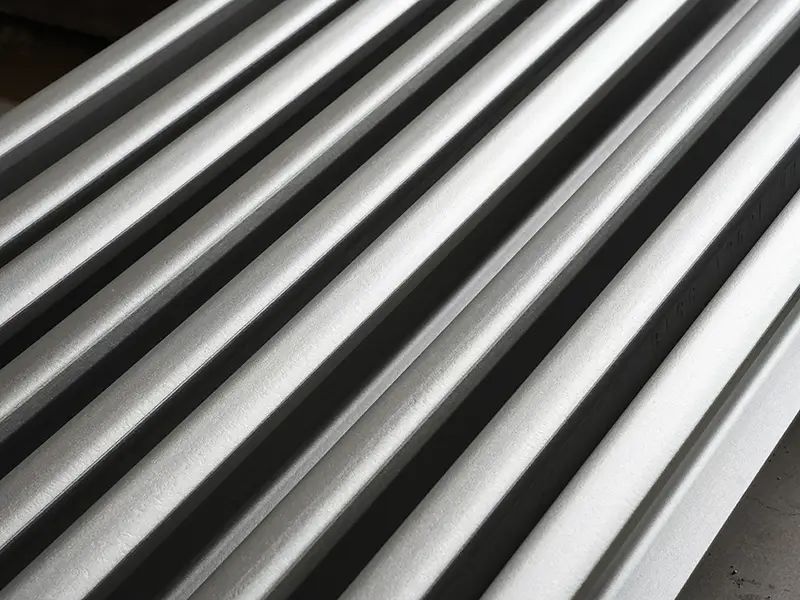
Abrasive blast cleaning is commonly used for this purpose. It removes unwanted surface material and produces a suitable surface profile, giving the coating a stronger mechanical grip and improving long-term coating adhesion.
Understanding Sa Blast-Cleaning Grades
ISO 8501-1 defines visual cleanliness grades for steel surfaces prepared for painting. The main blast-cleaning grades are:
| Grade | Description | Typical Consideration |
|---|---|---|
| Sa 1 | Light blast cleaning | Removes loose mill scale, rust, and poorly adhering contaminants |
| Sa 2 | Thorough blast cleaning | Removes most mill scale, rust, and previous coatings |
| Sa 2½ | Very thorough blast cleaning | Leaves only slight traces of contamination in the form of spots or stripes |
| Sa 3 | Blast cleaning to visually clean steel | Produces a uniformly metallic appearance |
Sa 2½ is a common surface preparation requirement in protective coating applications, but this does not mean that all rail projects must adhere to this grade.
Actual requirements should be determined based on the specified coating system, project specifications, and the rail’s operating environment. Refer to ISO 8501-1 for definitions of surface cleanliness levels.
Surface Cleanliness Is Not the Same as Surface Profile
Blast cleaning cleanliness mainly shows whether rust, mill scale, and other contaminants remain on the surface. Surface profile refers to the texture or roughness created by abrasive blasting.
These two items should be assessed separately.
Even if the surface meets the required cleanliness standard, it may still affect coating adhesion and coverage if the surface profile does not meet the coating requirements. For projects with higher requirements, cleanliness and surface profile should be checked together, and the acceptance criteria and test methods should be clearly defined.
After blasting, the surface should also be checked for remaining abrasive, dust, oil, or flash rust. The time between blasting and the first coat should be controlled according to site conditions and the coating manufacturer’s requirements.
Choosing the Coating System and Total DFT
A crane rail coating system may use an epoxy primer, an intermediate coat, and a weather-resistant finish. The exact products and number of coats should be selected for the project rather than assumed from a standard three-coat arrangement.
The Functions of Different Coatings
| Coating Layer | Main Function | Specification Details |
|---|---|---|
| Primer | Provides initial corrosion protection and adhesion | Product type, surface compatibility, and specified DFT |
| Intermediate coat | Builds protective film thickness and barrier performance | Product compatibility and specified DFT |
| Topcoat | Provides the required finish and resistance to weathering or other exposure | Product type, color, gloss, and specified DFT |
An epoxy system may be suitable for a particular industrial environment, while a compatible polyurethane finish may provide additional weathering and UV resistance. Other environments may require different products or a specifically qualified coating system.
The selection should consider the exposure conditions, expected maintenance strategy, steel substrate, and coating manufacturer’s technical recommendations.
How Much Coating Thickness Is Required?
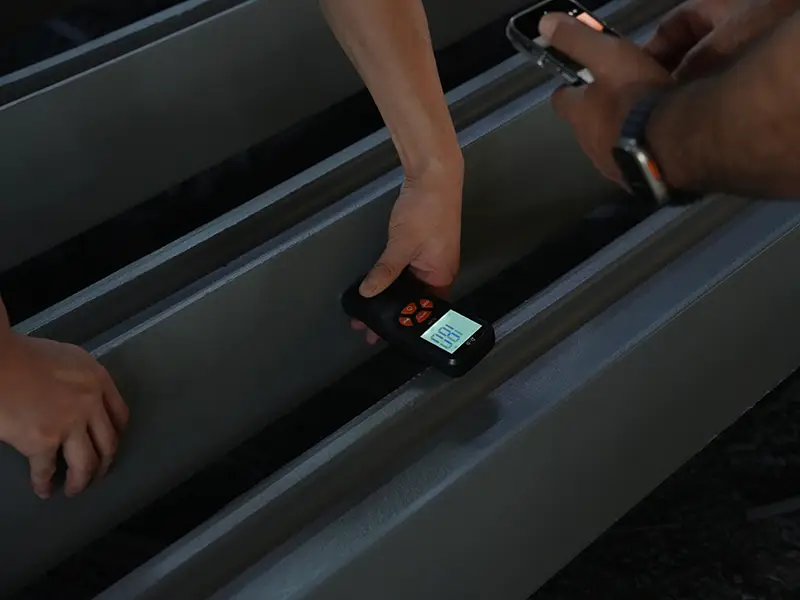
Dry film thickness (DFT) is the thickness of the coating after it has dried or cured, as applicable to the product and inspection procedure.
The specification should state the required DFT for individual coats and the total coating system. It should also define the applicable measurement method and acceptance criteria.
A total DFT of 260 μm, for example, may be specified for a particular project. That figure should not be treated as a default requirement for every crane rail.
Two coating systems with the same total DFT may differ in their products, layer arrangement, corrosion performance, and suitability for the intended environment.
How ISO 12944 Fits into the Specification
ISO 12944 provides guidance for selecting protective paint systems based on corrosivity categories, surface preparation, and intended durability.
For atmospheric exposure, the project team should identify the relevant environment, such as an industrial area or a coastal location, and specify the performance required from the coating system.
The selected system should then be checked against the applicable project requirements and coating manufacturer’s documentation.
ISO 12944 is a reference for protective coating selection, not a substitute for the rail-specific requirements in the project drawings. Wheel-running surfaces, welding zones, support interfaces, and installation methods may require additional instructions.
The project should also identify the applicable standard editions and any additional requirements imposed by the owner or contractor.
Rail Head, Welding Zones, and Masking Requirements
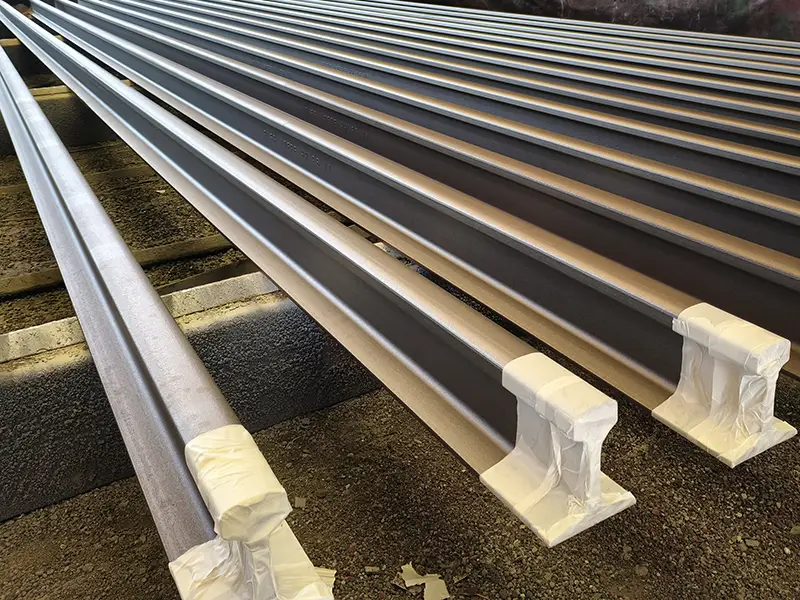
Masking should be defined before the rails enter the painting process.
Rail Head and Wheel-Running Surface
The wheel-running surface often needs to remain uncoated where the crane wheel makes direct contact with the rail.
Paint on this surface can interfere with the intended wheel-rail contact and wear away during operation. However, the required treatment must be confirmed against the rail design, wheel arrangement, and project drawings.
Welding Zones and Rail Ends
If the rails will be welded during installation, the coating specification must be coordinated with the approved welding procedure.
Coating in the welding zone may need to be removed before welding. After the joint is completed, the specified corrosion protection may need to be restored using an approved repair system.
The required removal width and repair method depend on the welding procedure, coating system, and project requirements. A fixed masking distance should not be applied to every rail joint without review.
Rail ends and other connection surfaces also need clear instructions. Depending on the connection method, some areas may require coating, while others may need to remain uncoated.
What to Include in a Crane Rail Coating RFQ
To obtain a comparable quotation, the customer should provide as much of the following information as possible.
Rail details
- Rail profile and applicable standard
- Steel grade and any heat-treatment requirements
- Quantity, individual lengths, and total rail length
Operating environment
- Indoor or outdoor installation
- Coastal, industrial, chemical, or other exposure
- Applicable corrosion category or project coating standard, if specified
Coating requirements
- Required surface-preparation grade
- Coating brand or approved product alternatives
- Number of coats and coating type for each layer
- Specified DFT per coat and total DFT
- Color, gloss, and finish requirements
- Required masking areas and welding provisions
Inspection and delivery requirements
- Required inspection records and acceptance criteria, if applicable
- Packaging, handling, and delivery requirements, including the destination
Request a Crane Rail Coating Quotation
Glory Rail supplies crane rails with project-specific processing and coating requirements. To assess your order, send the rail specifications, quantity, operating environment, coating schedule, and any drawings that identify masked areas or welding requirements.
If the coating system has not yet been finalized, share the project requirements first so that the technical scope can be reviewed before pricing.
For more information, visit our Rail Corrosion Protection page, or contact Glory Rail to discuss your project.