
Glory Rail supplied S49 steel rail to a Thailand-based equipment supplier for a stacker machine project. The order required custom end processing — a 45-degree bevel cut paired with a 5mm chamfer — and passed third-party inspection before shipping from Tianjin to Bangkok in March 2026. This case study walks through the client background, technical requirements, fabrication process, and quality findings.
Client Background
A Thailand-based equipment supplier with its parent headquarters in Germany contracted Glory Rail to supply S49 steel rail for an industrial project. The client’s core business covers material handling equipment and open-pit mining machinery, serving heavy industrial operations across Southeast Asia.
For this order, the client acted as a sub-supplier. The rails were destined for a stacker machine — a rail-mounted unit that travels along tracks to stack and reclaim bulk materials in outdoor stockyards. The traveling mechanism of a stacker depends on precisely processed rails to maintain stable movement under dynamic loads, making rail end preparation a critical specification in the client’s drawings.
Project Overview
| Item | Details |
|---|---|
| Client | Thailand-based equipment supplier |
| Application | Stacker machine traveling track |
| Product | S49 steel rail (49E1, EN 13674-1) |
| Profile | Height 149mm / Base 125mm / Head 67mm / Web 14mm |
| Unit weight | 49.39 kg/m |
| End processing | 45-degree bevel cut + 5mm chamfer |
| Inspection | Third-party agency |
| Port of loading | Tianjin, China |
| Destination port | Bangkok, Thailand |
| Shipment date | Early March 2026 |
Project Requirements
The order specified S49 steel rail (49E1 per EN 13674-1) with two custom end-processing requirements detailed in the client’s technical drawings:
- A standard 45-degree bevel cut at each rail end
- An additional 5mm chamfer applied along the beveled edge
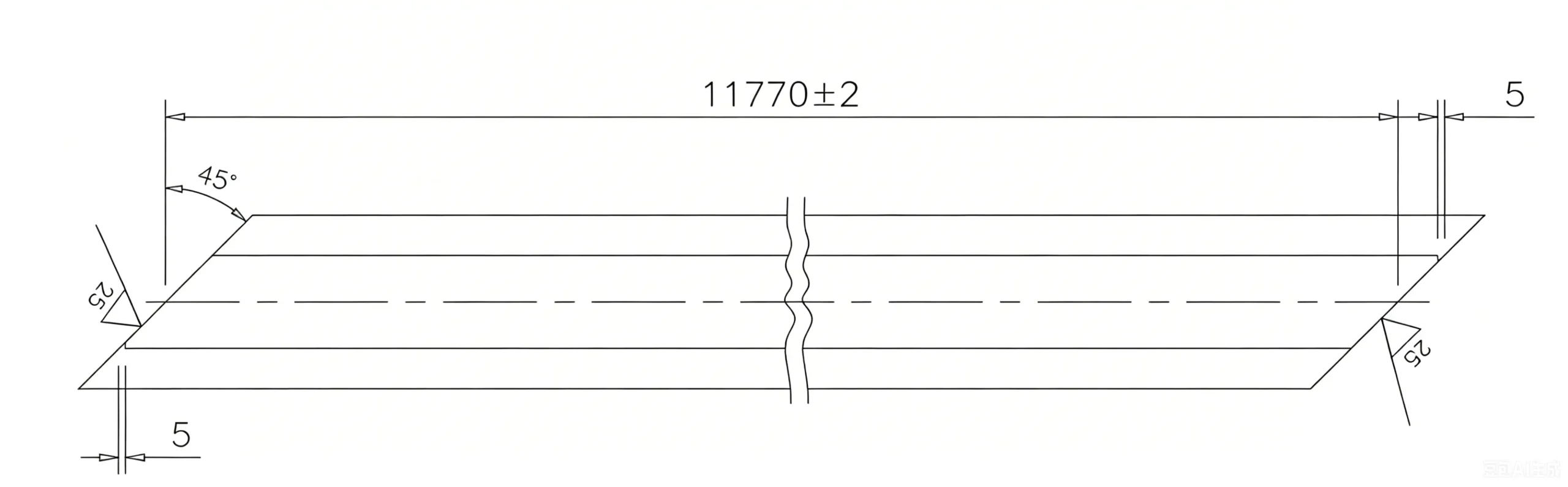
45-Degree Bevel and 5mm Chamfer
The 45-degree bevel is a conventional rail end preparation method. It creates an angled face at the rail end that facilitates joint alignment when sections are connected using fishplates or field welding. This ensures proper load transfer between adjacent rails under the stacker’s wheel loads.
The 5mm chamfer addresses a different concern. The beveling process leaves a sharp corner where the angled cut meets the rail head surface. Without treatment, this edge creates three problems: burrs from cutting can interfere with joint fit-up, the sharp edge is prone to chipping during handling and transport, and it poses a safety risk for workers handling the rails on site.
Applying a 5mm chamfer removes this corner. The result is a clean, slightly rounded transition that lets wheels pass smoothly over joints without catching on a ragged edge, and ensures the rails arrive at the installation site in ready-to-install condition.
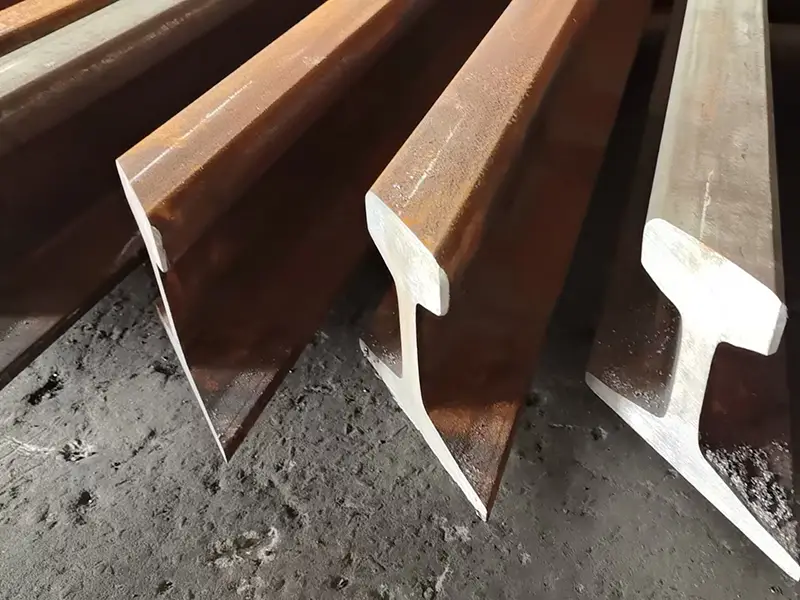
Fabrication and Processing
After cutting the S49 steel rail to the specified lengths, each rail end was processed in the following sequence:
- 45-degree bevel cutting per drawing dimensions
- 5mm chamfer applied to the beveled edge
- Deburring of all cut surfaces to remove residual material
- Final visual and dimensional inspection of each end
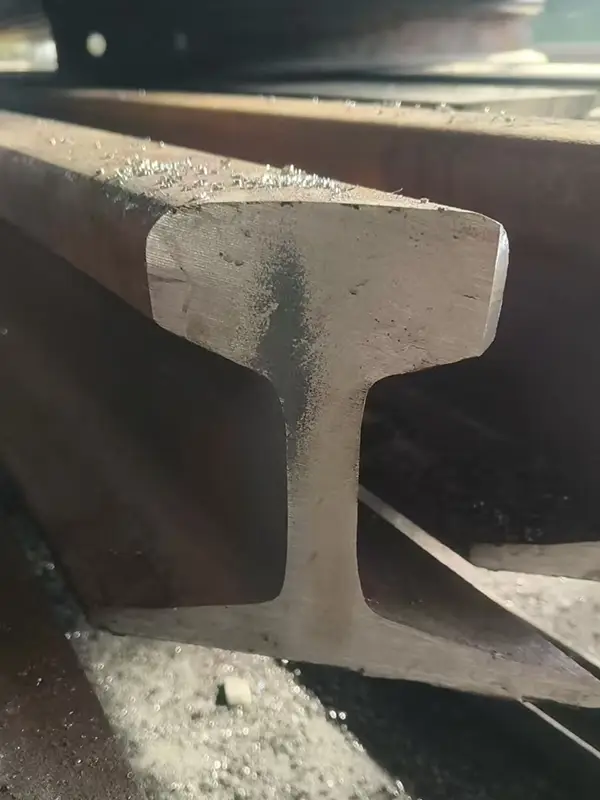
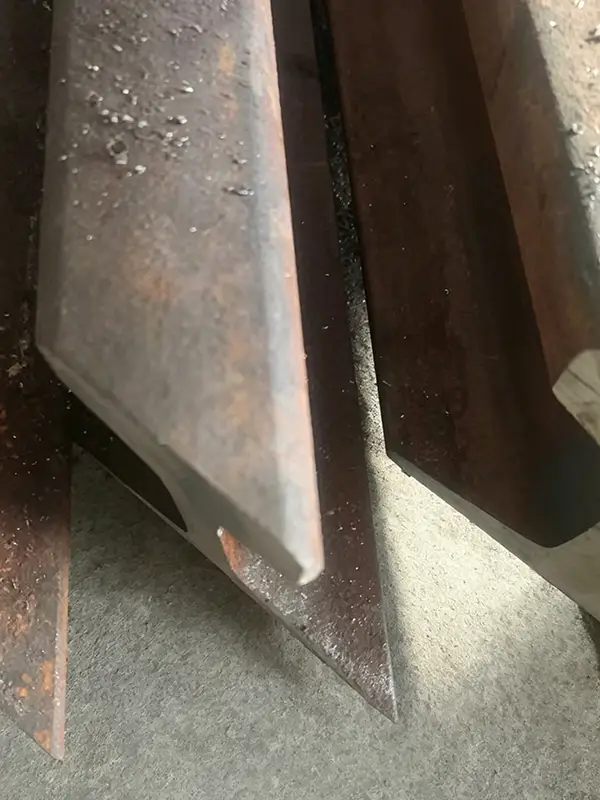
The finished rail ends showed burr-free surfaces with the chamfer properly blended into the bevel face. This edge quality directly affects how smoothly stacker wheels transition across rail joints during operation.
Third-Party Inspection: Surface Rust
The client engaged a third-party inspection agency to verify the rails before shipment. The inspection report flagged surface rust on the rail heads and webs.
This finding is expected for hot-rolled steel rail. The observed rust was superficial floating rust — a thin oxide layer that forms when airborne moisture contacts exposed steel. Rails stored outdoors or moving through varying weather during transit will develop this layer regardless of protective measures. Rain, snow, and even high-humidity air are sufficient triggers.
The distinction between floating rust and structural corrosion matters here. Floating rust does not penetrate the rail surface or affect mechanical properties. When the stacker machine begins operation, the crane wheels running over the rail head will wear away the rust layer within the first few passes, exposing a clean, bright running surface. This is standard behavior for steel rail in outdoor industrial applications and does not constitute a quality defect.
Packaging and Shipping
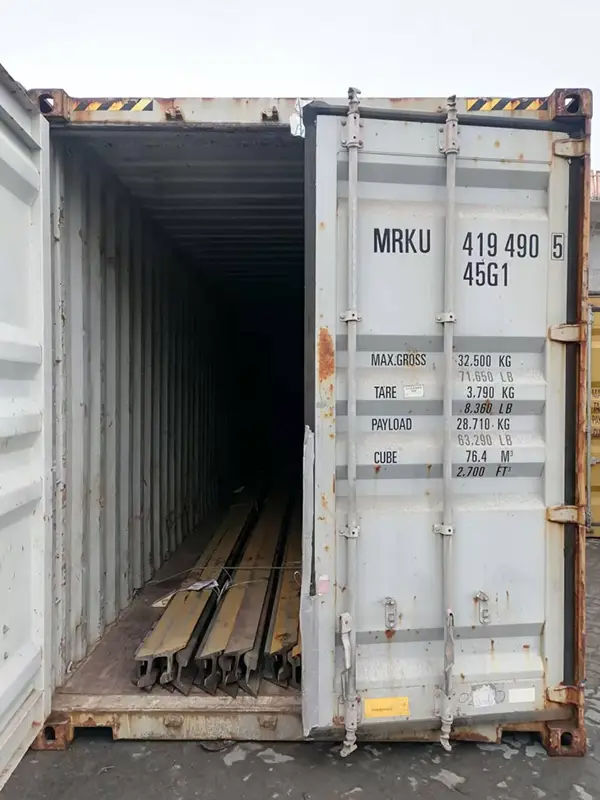
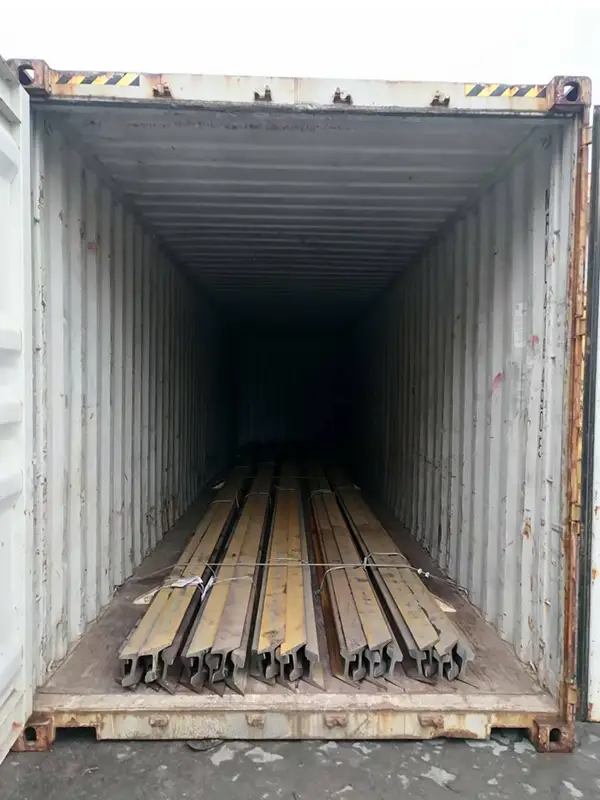
The rails were loaded into a standard shipping container and secured to prevent movement during ocean transport. The shipment departed from Tianjin port in early March 2026, destined for Bangkok, Thailand.
Why Glory Rail
This project demonstrates several capabilities central to Glory Rail’s supply approach for S49 steel rail and other industrial profiles:
- Custom end processing — bevel cutting, chamfering, and deburring executed to exact drawing specifications
- Technical communication — clear explanation of surface conditions like floating rust to inspectors and end users
- Export logistics — proper packaging, documentation, and port coordination for international delivery
The S49 steel rail profile (49.39 kg/m, EN 13674-1) offers a load capacity suited to the traveling mechanisms of stacker machines and similar material handling equipment. Glory Rail supplies this profile alongside other EN standard rails and crane rail systems with full mill test certificates and custom processing capabilities.
If your project requires S49 steel rail or similar industrial rail profiles with custom machining, contact our engineering team for technical review and quotation.