
Glory Rail supplied A65 crane rail with a full protective coating system to a Sri Lankan client serving the Sri Lanka Port Authority. The project involved 28 long rails and 16 short rails, all processed with SA2.5 blast cleaning and a three-layer paint system rated for marine environments. This case study covers the coating specification, the masking strategy for unpainted zones, and a technical discussion with the client regarding short rail end sections.
Client Background
The client is a Sri Lanka-based supplier whose end user is the Sri Lanka Port Authority (SLPA). As the terminal operator managing Colombo’s harbor facilities, SLPA requires crane rail systems that withstand saltwater exposure, high humidity, and continuous heavy-duty loading cycles.
The rails were ordered for port machinery — gantry cranes and other harbor equipment operating along the quay. In such environments, bare steel rail surfaces would oxidize rapidly without a properly engineered barrier coating. The client therefore specified a detailed painting regimen anchored to international surface preparation standards.
Project Overview
| Item | Details |
|---|---|
| Client | Sri Lanka-based supplier |
| End user | Sri Lanka Port Authority (SLPA) |
| Application | Port crane rail system |
| Product | A65 crane rail (DIN 536) |
| Long rails | 28 pieces × 12 meters |
| Short rails | 8 pieces × 1.5 meters (2 sets) |
| Surface preparation | Sand/grit blasting to SA2.5 minimum |
| Coating system | 2 coats epoxy zinc primer + 1 coat polyurethane finish |
| Total DFT | 260 microns minimum |
| Topcoat color | Yellow RAL-1007 |
| Port of loading | Tianjin, China |
| Destination port | Colombo, Sri Lanka |
| Shipment date | August 2024 |
Coating Specification
The client’s specification required a multi-layer paint system designed for long-term corrosion protection in a coastal port environment. The coating structure was defined as follows:
- Surface preparation: sand or grit blasting to achieve a minimum cleanliness grade of SA2.5 per ISO 8501-1
- Primer: two coats of two-pack epoxy zinc-rich primer, 100 microns each (200 microns total)
- Topcoat: one coat of polyurethane epoxy finish paint in yellow RAL-1007, 60 microns
- Minimum total dry film thickness (DFT): 260 microns
SA2.5 blasting removes virtually all mill scale, rust, and previous coatings, leaving only faint stains. This cleanliness grade is the industry standard for heavy-duty marine paint systems because the roughened surface profile gives the primer excellent mechanical adhesion — without it, even high-grade epoxy coatings would delaminate prematurely under saltwater exposure.
Masking Strategy: Rail Head and Welding Area
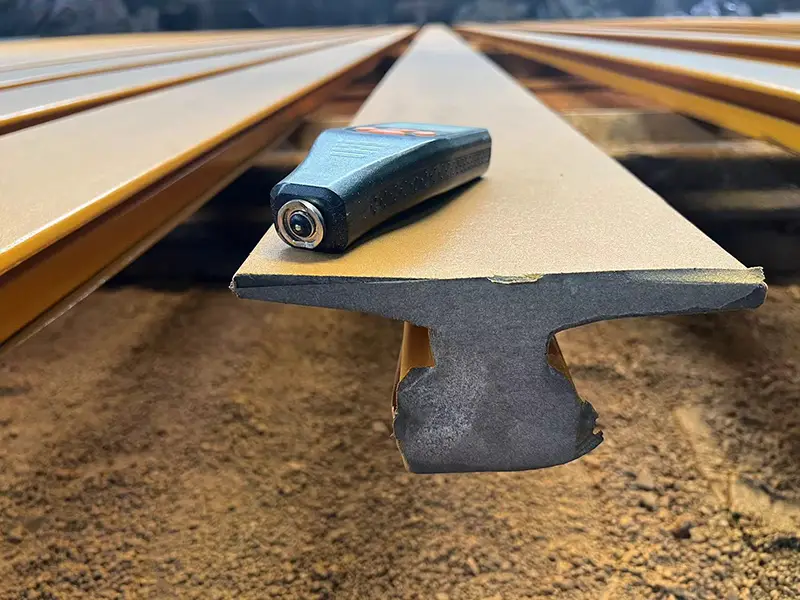
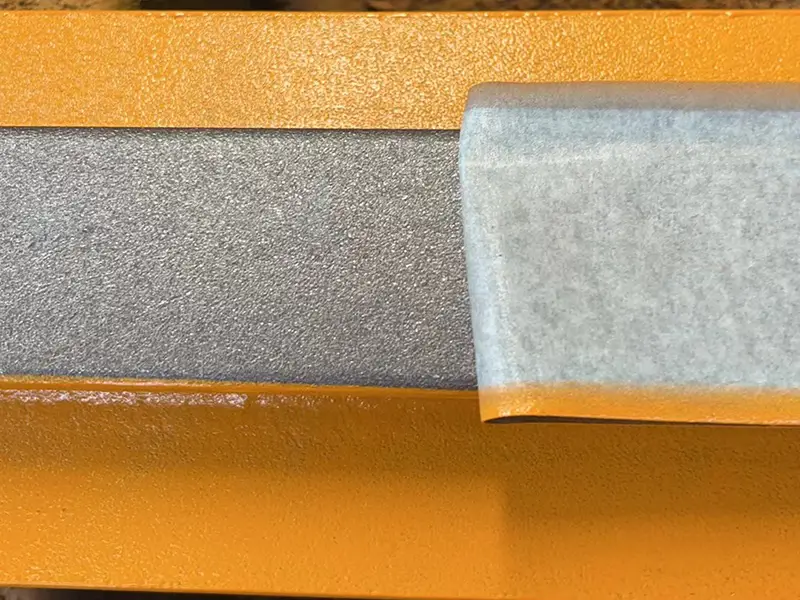
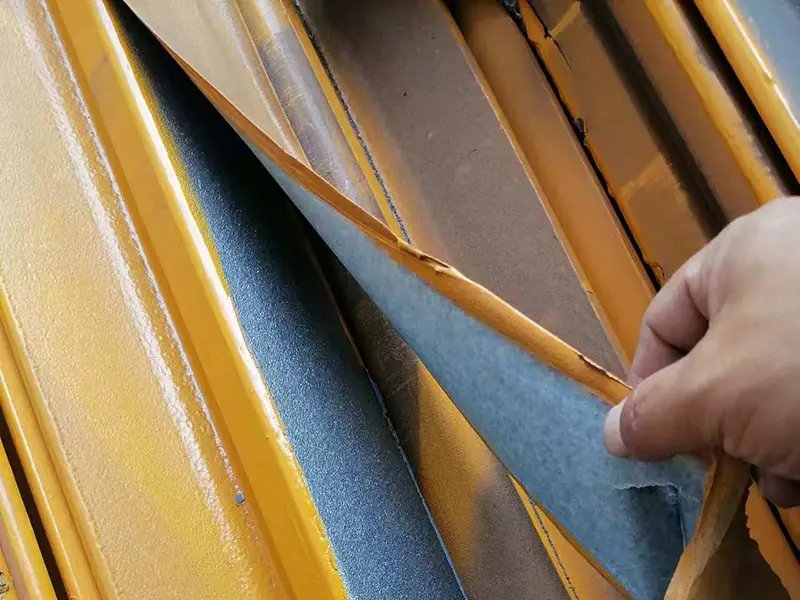
The specification stated that the top of the rail head and all weldable areas must remain free of any paint. Paint on the running surface would interfere with wheel contact, and paint in welding zones contaminates the weld pool, causing porosity and weakened joints.
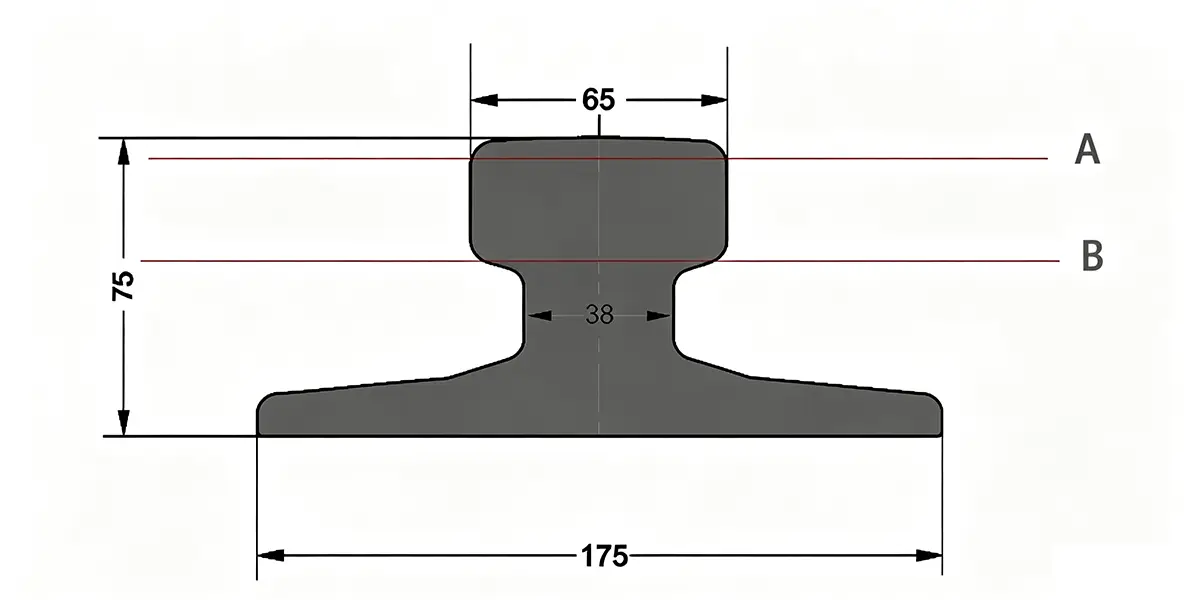
Using the client’s cross-section drawing, the team identified the exact boundary — referred to as the “A line” — above which no coating would be applied. The factory covered the rail head and the designated cross-section zones with protective film before beginning the painting process. With these areas shielded, the entire remaining surface received a full 360-degree coating.
Short Rail End Sections: A Technical Discussion
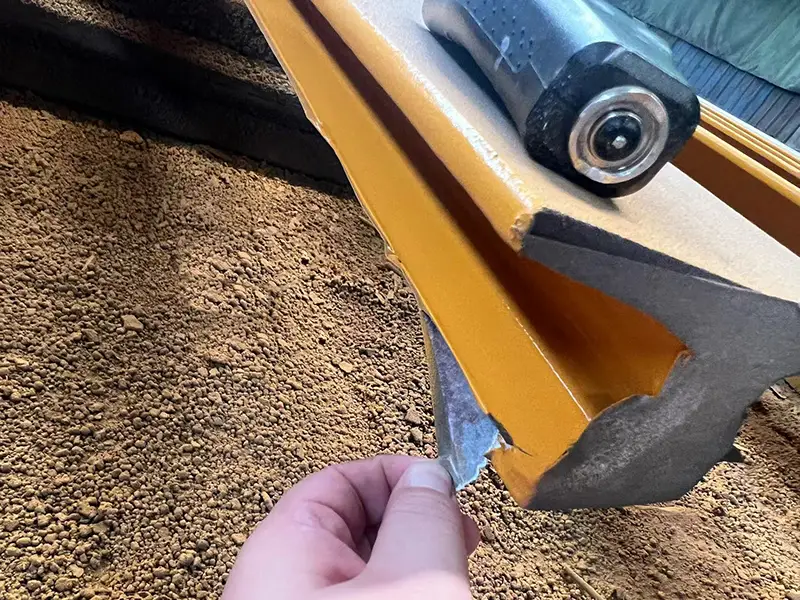
For the short rail pieces, the client initially requested that both end cross-sections remain unpainted, extending the same logic applied to the long rails. However, after reviewing the short rail drawings together, Glory Rail’s engineering team clarified that the L-shaped cut at the short rail ends is not a welding zone.
The L-type profile on these short sections is a geometric feature for alignment and seating, not a joint prepared for field welding. Because no welding will occur at this location, applying coating to the L-cut surface does not risk weld contamination. Leaving it bare, on the other hand, would expose raw steel to the port atmosphere, creating an unnecessary corrosion initiation point.
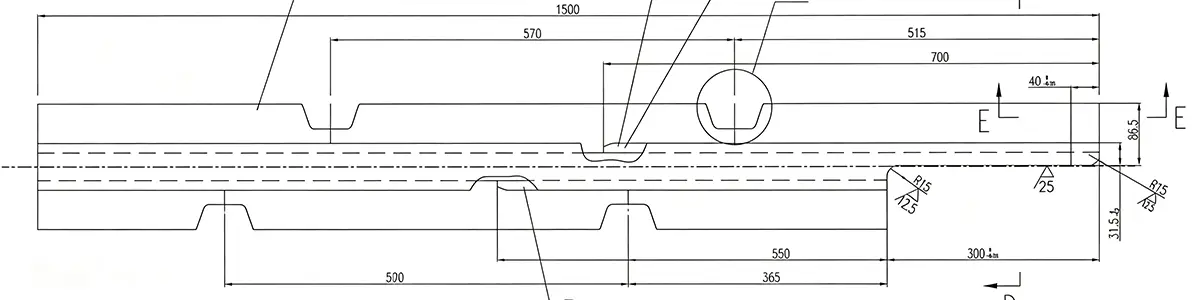
After reviewing the drawing, the client agreed to have the short rail end sections fully coated. This decision eliminated a potential weak spot in the corrosion protection system.
Coating Application and Drying
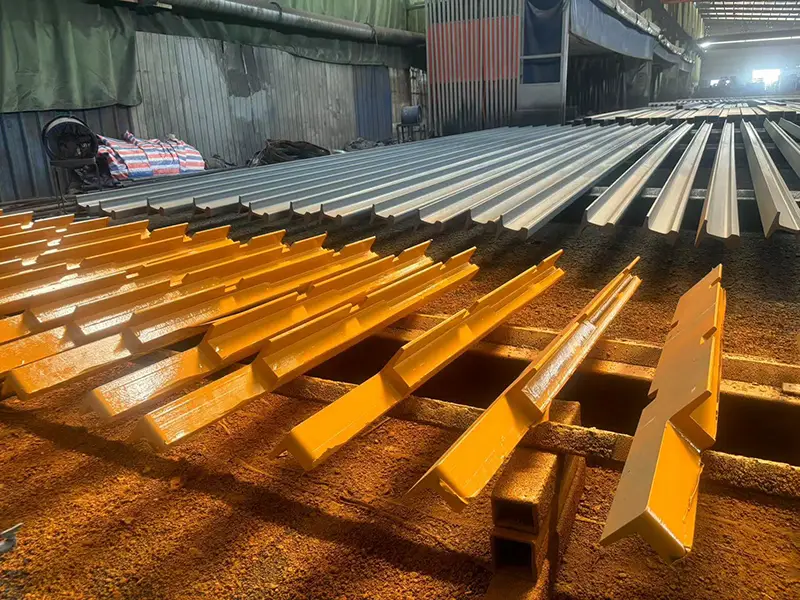
Once masking was complete, the blasting and painting sequence proceeded in stages. After each primer coat, the surface was allowed to cure before the next layer was applied. The polyurethane topcoat in RAL-1007 yellow was applied last, giving the rails a uniform, high-visibility finish suited for a working port environment.
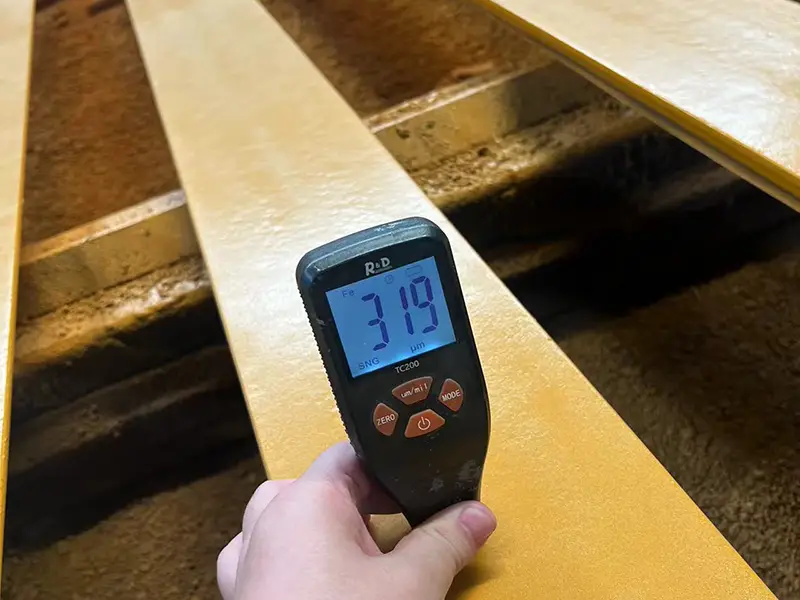
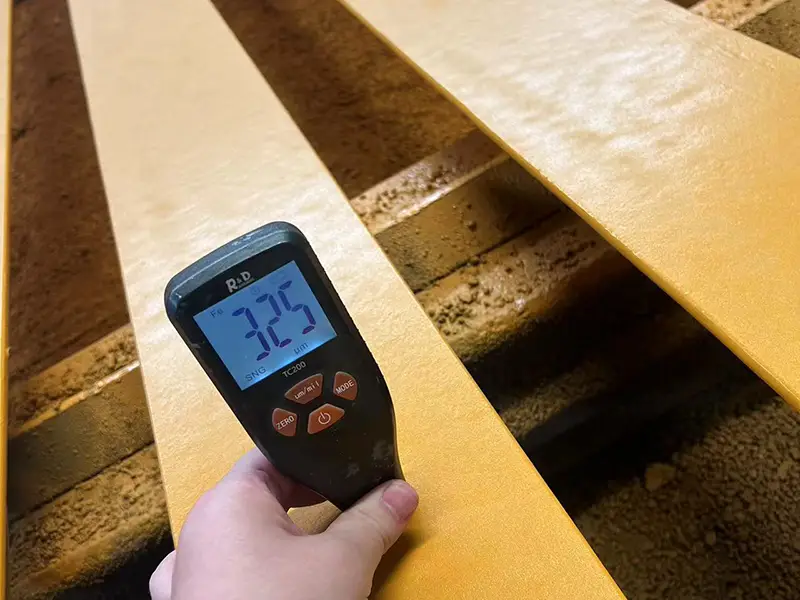
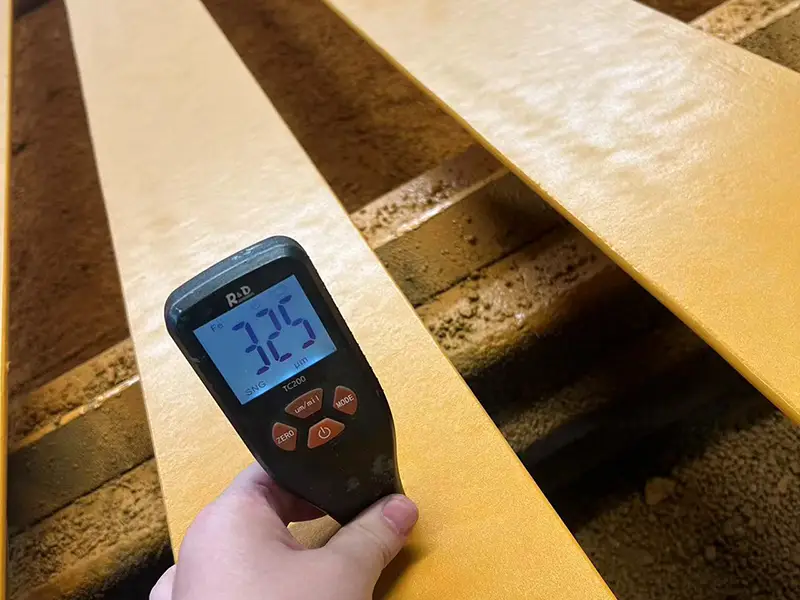
After the final coat, each rail was placed in the drying area for curing. Dry film thickness was measured at multiple points along the rail body to verify that the total DFT met or exceeded the 260-micron specification.
Packaging and Shipping
The fully coated rails were loaded onto steel transport frames and secured for ocean freight. The shipment departed from Tianjin port in August 2024, with Colombo port as the destination. All rails arrived with the coating system intact, the rail head running surfaces clean, and the welding zones properly masked.
Why Glory Rail
This project demonstrates Glory Rail’s capability to execute coating projects that go beyond standard supply. Key factors include:
- Standards compliance — SA2.5 surface preparation and multi-layer epoxy/polyurethane system executed to specification
- Precision masking — rail head and welding zones protected per the client’s cross-section drawing, ensuring 360-degree coating on designated surfaces only
- Technical clarification — proactive review of the short rail L-type cut to resolve a coating scope question before production
- Quality verification — DFT measurements at multiple points confirming 260-micron minimum
Glory Rail supplies A65 crane rail to DIN 536 specifications with full custom processing capabilities including cutting, drilling, head hardening, and protective coating systems for port, industrial, and marine applications. For projects requiring painted crane rail with specific coating standards, contact our engineering team for technical review and quotation.