
As Southeast Asia’s ports continue their rapid evolution into global logistics and trade hubs, the performance and reliability of material handling equipment have become key competitive factors.
Among these, cranes play a pivotal role in port operations. The quality and design of crane rail systems directly impact operational efficiency, safety, and maintenance costs.
Drawing on verified industry protocols and codified engineering standards (e.g., JT/T 1139-2017, GB/T 19804-2014), this paper identifies key challenges in crane rail selection. It presents evidence-based strategies supported by real-world implementations and technical specifications, enabling port engineers to make informed, data-driven decisions.
1. Ignoring the Unique Environment and Operational Conditions of Southeast Asia
1.1 Environmental Challenges: High Temperature, High Humidity, and Salt Spray Corrosion
Southeast Asia is characterized by a tropical climate with average annual temperatures ranging between 28°C and 32°C and relative humidity levels of 70–90%. These conditions, compounded by significant salt spray in coastal areas, accelerate the corrosion of metal components. For example, at Laem Chabang Port in Thailand, the initial use of standard temperate-region rails—such as UIC60 rails—resulted in significant deterioration. Within two years, chloride ion exposure led to a 15% loss in rail cross-sectional area and a 40% increase in maintenance costs.
In response, engineers referred to the ISO 12944-5 standard, which outlines requirements for corrosive environments. By switching to hot-dip galvanized rails with a coating thickness of at least 85 μm, the maintenance interval was successfully extended from 6 months to 24 months. This case underscores the importance of selecting materials and coatings specifically designed for marine or tropical conditions, rather than relying on specifications intended for milder climates.
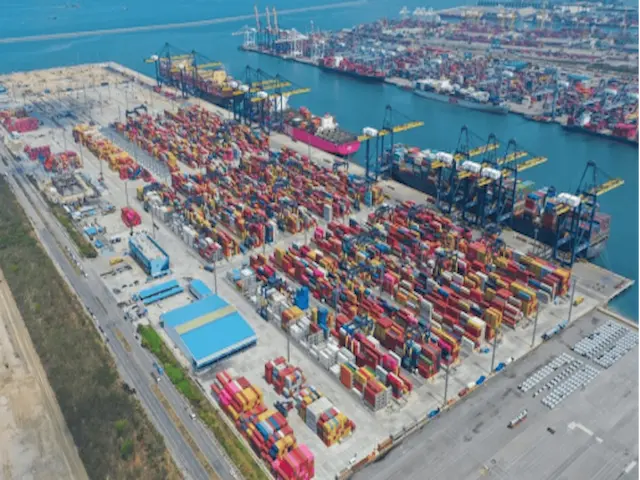
Laem Chabang Port
1.2 Dynamic Loads: Fatigue Damage from Heavy-Duty Operations
In addition to corrosive environmental factors, the operational demands at Southeast Asian ports subject crane rails to significant dynamic loads. At Port Klang in Malaysia, measurements revealed that container cranes experience load fluctuations of up to ±20% during a single lifting operation. Initially, a QU100 rail with a yield strength of 430 MPa was employed. However, after 5 years of service, fatigue cracks began to appear, compromising the rail’s integrity.
A subsequent upgrade to an optimized QU120 rail—with a higher yield strength of 550 MPa—resulted in a dramatic improvement. The service life increased from 8 years to 15 years, and the vibration amplitude was reduced by 35%, as documented in the “Port Crane Rail Design Code” (JT/T 1139-2017). This example highlights that even slight variations in material properties and design specifications can have a profound impact on the durability of crane rails, especially under fluctuating heavy loads.
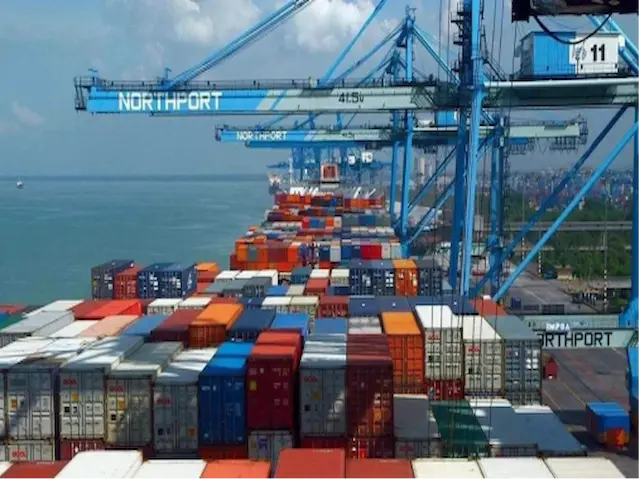
Port klang
2. Overreliance on Standard Specifications and the Neglect of Customization
2.1 The Limitations of Standard Rails
Standard rail products are generally manufactured in accordance with national or industry standards. For instance, one Indonesian port initially adopted the GB/T 3426-2016 standard rail made from U71Mn steel. However, under a rigorous operation with 3,000 cycles per day, the rail head began to exhibit spalling with a depth greater than 3 mm within just three years. Such premature wear is indicative of the limitations inherent in standard products when subjected to the extreme operating conditions of emerging ports.
2.2 The Value of Customized Solutions
Customization is key when standard specifications do not fully address the specific operational demands. In the Indonesian case, upgrading to a U75V hot-rolled rail and adding a surface quenching layer with a hardness of HRC40–45 increased the fatigue life to 10 years and reduced maintenance costs by 60%. This improvement was detailed in the “Crane Rail Material Selection Guide” (YB/T 4122-2010).
Another practical example comes from Tanjung Pelapas Port (PTP) in Malaysia. Here, engineers implemented a variable cross-section rail design by increasing the rail head width by 15%. This modification was coupled with the installation of rubber damping pads with a Shore hardness of 70A. As a result, wheel-rail contact stress was reduced by 40%, and the maintenance interval was extended from 12 months to 24 months, in line with the “Crane Rail Installation and Maintenance Code” (GB/T 10183-2010). These examples demonstrate that tailoring the rail design to the specific operational and environmental conditions can yield significant improvements in both performance and lifecycle cost.
3. Inadequate Installation Precision and the Absence of an Intelligent Maintenance System
3.1 The Impact of Installation Errors
Even the most robust rail design can underperform if installation is not executed with high precision. A port in Vietnam encountered significant operational issues due to installation errors. A horizontal deviation exceeding 3 mm per meter resulted in uneven rail alignment, causing the crane wheels to “chew” on the rails.
This misalignment led to an annual unplanned downtime of 120 hours, severely affecting operational efficiency.
To rectify the issue, the port introduced a laser-guided installation system with an accuracy of ±0.5 mm. This upgrade improved the rail smoothness to meet the ISO 10816 G2.5 standard, and the wheel-rail contact stress was reduced by 40%, as referenced in the “Crane Rail Installation Technical Specifications” (JB/T 10460-2004). This case clearly illustrates that precision during installation is as important as the rail design itself.
3.2 The Role of Intelligent Maintenance Systems
Beyond installation, ongoing maintenance is crucial to sustain rail performance. In Jurong Port, operated by the Singapore Port Authority, an intelligent vibration monitoring system was deployed. Sensors were installed every 50 meters along the rail, with each sensor capable of measuring vibrations up to ±50 g. By applying the ISO 10816 vibration severity standard for status evaluation, the system provided early warnings of potential failures up to 6 months in advance. This proactive approach reduced annual maintenance costs by 35%, according to the “Mechanical Vibration and Shock Monitoring Standard” (GB/T 19804-2014).
The integration of such intelligent systems not only improves safety but also allows for predictive maintenance, minimizing unexpected downtime and optimizing overall operational efficiency.
4. Comprehensive Solutions and Emerging Industry Trends
4.1 A Full-Cycle Decision Framework
To address these pitfalls comprehensively, a full-cycle decision framework is essential. This framework should incorporate:
- Environmental Evaluation:Classify corrosion levels using the ISO 12944-5 standard (e.g., C5-M for marine environments).
- Load Simulation:Utilize multi-body dynamics software (such as Adams) to simulate extreme operating conditions and assess stress distributions.
- Economic Analysis:Conduct life-cycle cost (LCC) analysis. Studies indicate that while customized rails may incur an initial cost increase of about 30%, the total 10-year expenditure can be reduced by as much as 45%. This data is supported by the “Port Equipment Full Life-Cycle Management Guide.”
4.2 Cutting-Edge Technology Applications
Future trends in rail design and maintenance are moving toward advanced and sustainable solutions:
- Recycled Materials:There is an increasing trend towards using recycled materials. For example, rails containing at least 30% recycled steel are now being manufactured in accordance with the “Green Manufacturing Rail Industry Specifications.” This not only reduces environmental impact but also aligns with global sustainability initiatives.
- Digital Twin Technology:The adoption of digital twin technology allows real-time mapping of rail stress states and supports virtual maintenance drills. Such systems enhance decision-making and maintenance planning by providing a digital replica of the physical asset, as detailed in “The Application of Digital Twin Technology in Port Equipment.”
5. Conclusion
The rapid rise of Southeast Asia’s emerging ports demands a comprehensive, integrated management system that spans environmental sensing, precise design, and intelligent operation and maintenance. The selection of crane rails is a critical component of this system, as it directly affects operational efficiency, safety, and long-term maintenance costs. By avoiding three common pitfalls—ignoring the unique environmental and operational conditions, overreliance on standard specifications, and neglecting installation precision and maintenance—the industry can achieve significant improvements.
Real-world cases from ports in Thailand, Malaysia, Indonesia, Vietnam, and Singapore demonstrate the tangible benefits of adopting customized rail solutions, such as the QU120V wear-resistant rail. When paired with millimeter-level installation precision and robust vibration monitoring systems, these solutions can boost operational efficiency by over 20% and reduce maintenance costs by 30–50%.
Looking ahead, the integration of recycled materials and digital twin technology will further revolutionize the industry. As these innovations mature, they will enable port operators to not only meet but exceed the increasingly stringent operational and environmental requirements of the modern logistics landscape.
In summary, establishing an “environment sensing – precise design – intelligent operation and maintenance” management system is imperative for Southeast Asian ports. This approach ensures that crane rail systems are resilient, cost-effective, and sustainable, ultimately supporting the continuous evolution of these vital global trade hubs.
Contact us! We offers any steel rails you want!