
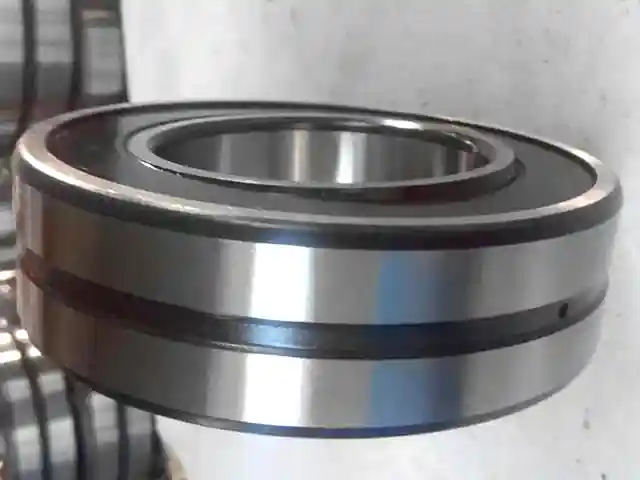
Common Causes of Damage
Crane sheave bearing failures are usually the result of multiple interacting factors. They can be grouped into five core categories: lubrication, loading, environment, installation, and fatigue. Details are as follows:
Poor lubrication (primary cause)
Grease aging or loss: Long-term operation causes grease to degrade or be lost, preventing the formation of an effective lubricant film.
Seal failure: Worn or deformed seals allow dust, water and other contaminants to enter the bearing.
Unreasonable lubrication intervals: Maintenance intervals that are too long lead to under-lubrication; intervals that are too short can cause excessive grease, poor heat dissipation, and grease waste.
Overload and abnormal loads
Sustained overload: Continuous loading beyond the bearing’s rated capacity accelerates wear and fatigue.
Impact loads: Sudden forces during lifting or braking create instantaneous impact damage to the bearing.
Uneven load distribution: Off-center loading causes local stress concentration and increased localized wear.
Harsh environmental impact
Extreme temperatures: High temperatures cause grease failure and reduced material performance; low temperatures can cause grease to thicken and reduce lubrication effectiveness.
Contamination and corrosion: Metal dust, sand and other solids entering the bearing produce abrasive wear; humidity, salt spray (marine/chemical environments) or corrosive gases cause rust and corrosion.
Insufficient installation accuracy
Manufacturing and fit deviations: Low machining accuracy of bearing housings or improper interference/clearance fits between bearing and housing.
Poor alignment: Misaligned shafts or non-concentric installation cause additional loads during operation.
Fatigue and cumulative wear
Normal wear: Long-term cyclic operation naturally produces wear that accumulates over time.
Fatigue damage: Repeated cyclic loading gradually produces fatigue spalling and pitting; poor lubrication accelerates this process.
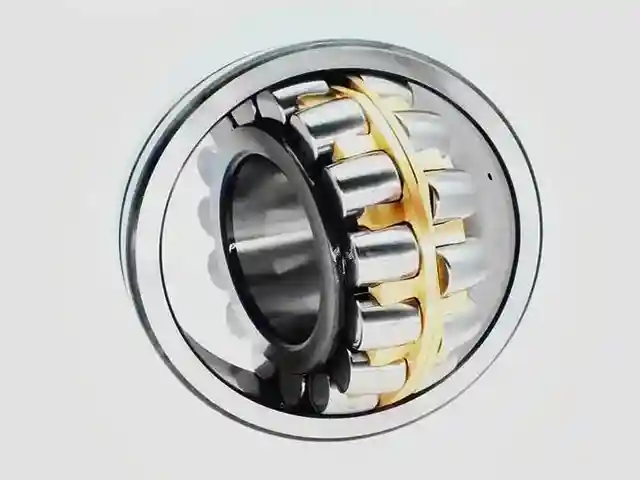
Targeted Improvement Measures
Based on the causes above, develop improvement measures in four core dimensions: lubrication optimization, material upgrade, structural improvement, and maintenance management — achieving “source prevention + process control.”
1. Lubrication system optimization (addresses poor lubrication)
Select the correct grease: Choose grease matched to operating conditions (high-temperature applications use lithium-based greases; corrosive environments use anti-corrosion synthetic greases).
Standardize intervals: Establish tiered lubrication schedules — normal conditions: replenish grease every 3 months; high-frequency/heavy-load conditions: monthly; inspect lubrication condition each shift.
Enhance sealing: Use a “double-seal + protective cover” arrangement to prevent contaminant ingress; replace seal rings regularly (recommend annually).
Convenient greasing: Install dedicated grease injection fittings; clean the grease nipple before injection to avoid contamination; limit grease fill to 1/3–1/2 of the bearing cavity (to avoid poor heat dissipation).
2. Material upgrades (addresses environmental corrosion and load damage)
Bearing material: Use high-carbon chromium steel for improved wear resistance, or stainless steel bearings in corrosive environments.
Auxiliary components: Use nylon or brass cages to reduce friction; select seals made of high-temperature and corrosion-resistant materials.
Surface treatments: Apply anti-corrosion coatings to the bearing housing to improve environmental resistance.
3. Structural optimization (addresses installation deviation and uneven loading)
Increase load capacity: Increase bearing size and optimize bearing-housing structure to improve rigidity.
Optimize load distribution: Improve sheave groove/profile to reduce rope impact on the sheave, thereby lowering bearing load.
Improve heat dissipation: Add heat-dissipating features to prevent grease failure and material degradation in high-temperature conditions.
Aid installation: Design positioning references and fixtures to improve bearing alignment during installation and reduce installation error.
4. Whole-life maintenance management (addresses fatigue accumulation and early faults)
(1) Core inspection items
Temperature monitoring: Operating temperature should be kept below 70°C; stop and inspect immediately if overheated.
Noise and vibration: Monitor for abnormal noise or vibration to detect wear or misalignment.
Visual and dimensional checks: Periodically inspect for cracks or deformation; disassemble for inspection every 6–12 months and measure bearing clearance — replace if clearance exceeds the initial value by 15%.
(2) Tiered maintenance intervals
Daily checks: Quick checks each shift (temperature, audible noise, visual signs).
Routine maintenance: Monthly (re-greasing, seal inspection, exterior cleaning).
In-depth inspection: Every 6 months (disassemble bearings, measure parameters, correct alignment).
Major overhaul/replacement: Every 2–3 years or according to actual wear condition (replace immediately when pitting, cage deformation, or significant increase in rotational resistance occurs).
Summary of Core Maintenance Points
The key to maintaining crane sheave bearings is “adequate lubrication, environmental isolation, early warning, and periodic control”:
Lubrication is central: Choosing the right grease, controlling fill quantity, and standardizing lubrication intervals can resolve over 60% of bearing failures.
Contamination control is fundamental: Double sealing and regular cleaning prevent abrasive damage caused by ingress of contaminants.
Early warning is critical: Temperature and vibration monitoring enable early detection of fatigue and installation issues, preventing fault escalation.
Replacement criteria should be clear: Replace bearings promptly when pitting, spalling, cage deformation, or significantly increased rotational resistance are observed to avoid collateral damage to adjacent components.
Contact us for professional products to protect & maintenance your crane!
↓↓