
I. Core Cause Diagnosis (Ranked by Priority)
Cause Category | Specific Manifestations | Fault Proportion | Identification Methods |
|---|---|---|---|
Poor Lubrication | Lubricating grease shortage, contamination, deterioration, incorrect selection (e.g., using ordinary grease instead of molybdenum disulfide grease) | ≥40% | Check grease outlet status of the grease nipple, grease color (blackened/caked), and whether there are metal debris in the bearing housing |
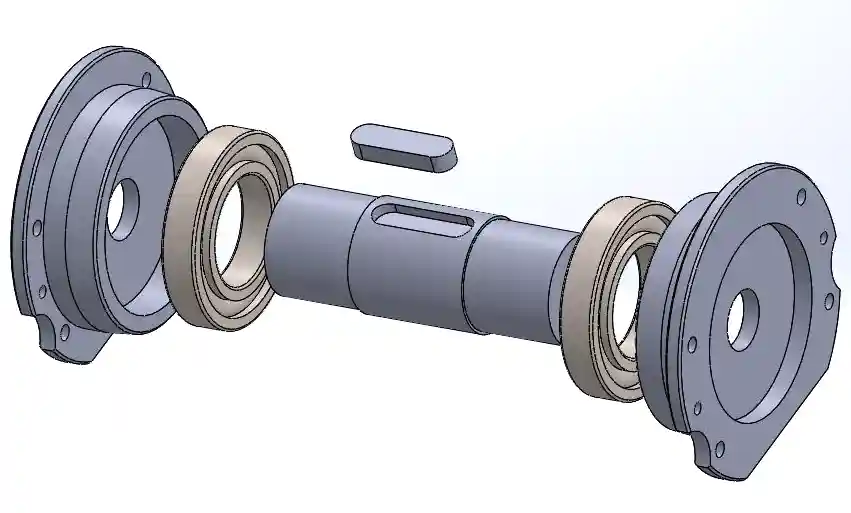
Installation Deviation | Excessive coaxiality deviation between shaft and bearing housing, excessive preload, bearing housing deformation | 20–25% | Detect with laser alignment instrument, measure whether axial clearance deviates from the design value (e.g., 0.05–0.15mm) |
Insufficient Cooling | Cooling pipeline scaling, inadequate cooler selection, ambient temperature >35℃ in summer | 15–20% | Measure inlet/outlet water temperature difference <8℃, or cooler surface temperature >60℃ |
Overload/OverSpeed | Actual load >rated tonnage, speed close to or exceeding the limit speed | 10–15% | Compare equipment nameplate with operation log, monitor whether current fluctuation is abnormal |
Foreign Object Intrusion | Dust and iron filings entering W33 oil groove or seal failure | 5–10% | After disassembly and inspection, observe whether there are abrasive scratches on the raceway and cage wear |
II. Material Thermal Response and Countermeasures
Material | Thermal Stability Characteristics | High-Temperature Failure Risk | Engineering Countermeasures |
|---|---|---|---|
GCr15 | Hardness 61–66HRC, temperature resistance ≤120℃ | Accelerated oxidation, contact fatigue spalling | Avoid long-term operation above 80℃, preferably used for cranes ≤50 tons |
G20CrNiMo | Carburized layer hardness 58–62HRC, excellent core toughness | Surface decarburization, core overheating and softening | Suitable for heavy-duty hub bearings of 32–125 tons, need to control carburized layer depth ≥1.2mm |
GCr15SiMoV | High hardenability, suitable for rings with outer diameter >280mm | Residual austenite is likely to occur due to improper heat treatment | Only used for self-aligning roller bearings of large cranes (e.g., above 80 tons), must undergo low-temperature tempering (150–180℃) after heat treatment |
Key Reminder: GCr15SiMoV bearings can still operate safely in the range of 80–90℃, but if continuously above 95℃, it will accelerate tempering softening, leading to hardness decrease >5HRC and early pitting corrosion.
III. Lubrication Management Specifications (For Heavy-Duty Cranes)
1. Recommended Lubricating Grease Types
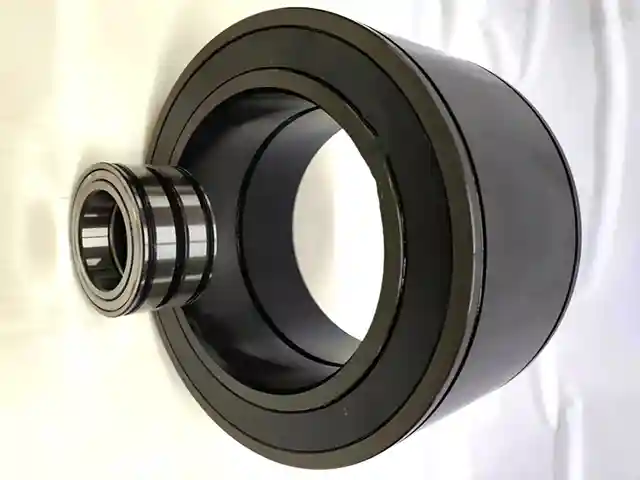
- First Choice: Molybdenum Disulfide (MoS₂) Complex Lithium Grease — Temperature resistance up to 200℃, excellent extreme pressure performance, suitable for heavy-duty bearings such as 352226 and 32230.
- Second Choice: Synthetic Complex Lithium Grease (e.g., Umrlube 8623) — Operating temperature -30℃~200℃, good shear resistance and water resistance, suitable for rainy and humid areas.
- Prohibited: Calcium-based grease (low melting point), ordinary lithium-based grease (insufficient temperature resistance), mixing different types of grease.
2. Filling Specifications
- Initial Filling Quantity: 30%–50% of the free space inside the bearing (excess will intensify temperature rise).
- W33 Oil Groove Maintenance: Supplement lubricating grease every 15 hours (high-intensity operation) or every 3000 hours (regular operation) using an automatic grease pump.
- Cleaning Requirements: Must clean the grease nipple before greasing to prevent dust contamination; it is strictly prohibited to disassemble the seal during operation.
IV. Temperature Monitoring and Alarm Thresholds
Parameter | Standard Value | Reference Standard | Disposal Action |
|---|---|---|---|
Normal Operating Temperature | ≤80℃ | GB/T 3215, JB/T 5294 | Continuous monitoring and record trends |
Temperature Rise Limit | ≤40℃ (relative to ambient temperature) | JB/T 6439, JB/T 7743 | Shut down immediately to check lubrication and cooling when exceeding the limit |
High-Temperature Alarm Threshold | 90℃ | Industry General Setting | Trigger sound and light alarm, automatic load limiting or shutdown |
Emergency Shutdown Threshold | ≥100℃ | Engineering Safety Redundancy Design | Immediately cut off power, forced cooling, and prohibit forced restart |
Monitoring Suggestion: Install PT100 platinum resistance sensors near the outer ring, inner ring and raceway of the bearing housing, adopt dual redundancy configuration, and connect the data to the central monitoring platform to realize real-time temperature rise curve analysis.

V. Emergency Handling Process (Response to Alarm Above 90℃)
- Immediate Shutdown: Cut off the crane power source and prohibit forced operation.
- Cooling Intervention: Start the standby cooling water circulation (if equipped);
- Purge the surface of the cooler with compressed air to remove scale;
- It is strictly prohibited to cool by directly pouring water to prevent thermal stress cracking.
- Lubrication Inspection: Disassemble the grease nipple and check if the grease is dry and carbonized;
- Take samples for inspection to detect water content and metal particle concentration.
- Disassembly and Evaluation:Check if there is spalling and discoloration on the raceway (blue-purple is a sign of overheating);
- Measure whether the clearance exceeds 20% of the original value.
- Resume Operation:Replace with standard-compliant molybdenum disulfide lubricating grease;
- Re-align and install, confirm the axial clearance;
- Run at low speed and no load, and resume full load only when the temperature is stably ≤70℃.
VI. Preventive Maintenance Suggestions
1. Seasonal Maintenance
- Before April every year: Perform pickling and descaling on the cooler (especially before summer);
- In October every year: Replace all bearing lubricating grease to avoid grease hardening due to low temperature in winter.
2. Environmental Adaptation
- If the area has high temperature (>35℃) and much dust in summer, it is recommended to upgrade the seal grade (e.g., add dust cover + labyrinth seal);
- Prefer bearings with PA66+nylon cages (e.g., NU2215 E) to reduce frictional temperature rise.
3. Record Management
Establish a “Crane Bearing Maintenance Log” to record each greasing time, dosage, temperature change and abnormal events.
If you encounter specific difficulties in dealing with crane bearing overheating problems, or need recommendations for high-temperature resistant bearing products suitable for working conditions, you can contact our professional technical team at any time — we provide free fault diagnosis guidance and customized maintenance solutions to make your equipment operate more stably!